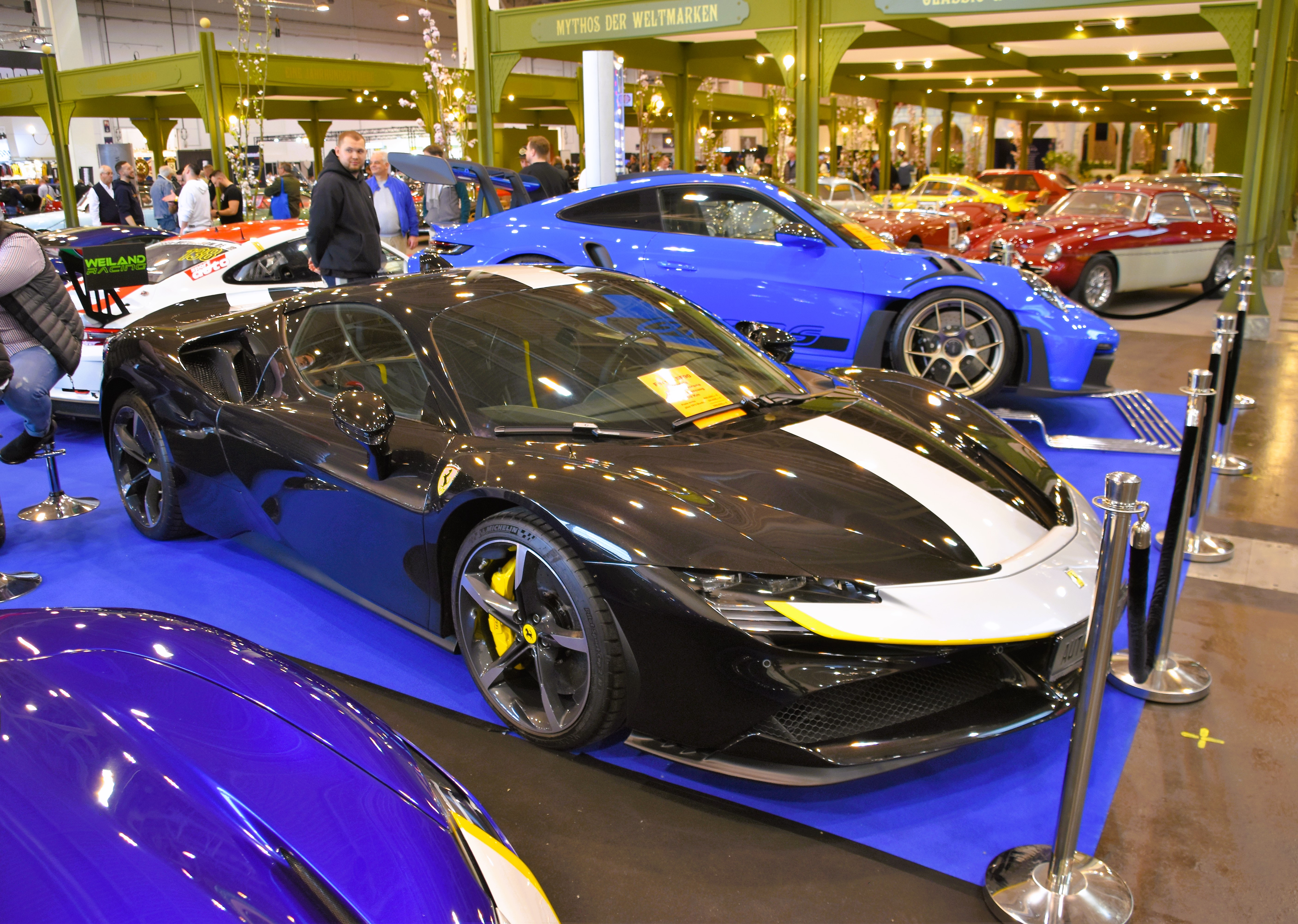
UK Supercar Depreciation 2026: Which Models Lose Most Value
Ferrari's SF90 and 296 GTB have lost half their value in used markets — here's what UK buyers ordering in 2026 need to know about supercar depreciation risk.
- The Ferrari Depreciation Crisis
- Why Overproduction Destroys Supercar Residuals
- The Hybrid Problem: Technology That Backfired
- Porsche: The UK Benchmark for Holding Value
- Which 2026 Orders Carry the Highest Depreciation Risk
- Key Takeaways
- Sources
UK supercar depreciation has produced some of the most dramatic value collapses seen in the high-performance market, with Ferrari models that once guaranteed appreciation now appearing on used listings at half their original price. For buyers placing orders in 2026, understanding which marques and models face the steepest falls has become as important as reading the spec sheet.
The Ferrari Depreciation Crisis
For decades, owning a mid-engined Ferrari was a near-guarantee of capital preservation. Buyers worked their way up through the brand — starting with a Portofino M or GTC4 Lusso, attending Ferrari events and racing programmes — before being granted access to the genuinely desirable models. That ecosystem produced cars like the 488 Speciale that appreciated roughly 200 per cent, and limited-edition models like the Daytona SP3 that sold for around $4 million new before fetching $26 million at auction.
That era appears to be over. Analysis of Ferrari values across European and US used car markets shows that almost all current Ferrari models — with the exception of the Icona series — have suffered major depreciation. This is described as unprecedented for the brand.
The most extreme case is the Ferrari SF90 Stradale. Positioned as the successor to the 488, it launched at approximately $600,000 and was billed as the first production Ferrari to reach 1,000 horsepower at supercar rather than hypercar pricing. It failed to deliver on that promise in the eyes of the market. SF90s are now regularly found advertised in the high two-hundreds to low three-hundreds of thousands of dollars — broadly a 50 per cent fall from transaction prices that, with options, frequently exceeded $800,000.
Why Overproduction Destroys Supercar Residuals
The SF90's collapse traces directly to one critical decision: Ferrari built close to 2,000 units. For a flagship halo car, that number proved fatal to residuals. The scarcity that underpins supercar value retention simply did not exist.
As Auto Express's UK depreciation analysis makes clear, the cars that hold value best share a consistent set of characteristics: limited availability, the right badge, and genuine specialness within a model range. A flagship 1,000 horsepower Ferrari built at volume contradicts all three simultaneously.
When early SF90 buyers — many of whom had paid over list — discovered that market values were softening rather than hardening, the resulting rush to sell accelerated the decline. A car positioned as a store of value had become a liability.
The Hybrid Problem: Technology That Backfired
The SF90 was not alone. Ferrari's 296 GTB, a mid-engined V6 hybrid, has followed the same trajectory. Analysis points to a primarily psychological problem: replacing a V8 with a V6, even one paired with a capable hybrid system producing competitive power figures, was never going to sit comfortably with a buyer base that values engine character above raw output.
Ferrari's hybrid execution has been criticised more broadly for prioritising technological achievement over emotional engagement. Where the LaFerrari — Ferrari's first hybrid — was described as a coherent, delicate experience, the SF90 and 296 were characterised as delivering a brash, less involving surge of power. Buyers noticed, and the used market reflected it.
This creates a specific risk for any supercar manufacturer planning to transition flagship models to electrified powertrains. If the driving experience does not match or exceed what the combustion predecessor offered, the market prices that disappointment in quickly.
Porsche: The UK Benchmark for Holding Value
Not every supercar is suffering. The Porsche 718 Cayman GT4 RS provides the clearest counter-example in UK data, retaining 65.22 per cent of its value after three years and 36,000 miles. Against an average new price of £128,300, a three-year-old GT4 RS is still worth approximately £83,675 — a loss of just over £44,000 across three years.
That retention level reflects everything the SF90 lacks: genuine scarcity, driver-focused engineering that received near-universal praise, and a position as the most special variant of an already desirable model. Auto Express does note the GT4 RS has cooled slightly from its peak — it previously held 69.64 per cent — as initial demand among the most motivated buyers has been satisfied. Even so, it remains one of the strongest depreciation performers across all segments in the UK market.
The lesson is consistent: limited-run, driver's-car purity beats technological complexity when it comes to supercar residuals.
Which 2026 Orders Carry the Highest Depreciation Risk
Based on the patterns in current market data, several categories of 2026 supercar orders carry elevated risk:
- High-volume flagship hybrids. Any manufacturer repeating Ferrari's SF90 error — launching a high-horsepower hybrid flagship in significant volume — risks the same residual collapse. Large production numbers combined with a divisive powertrain has proven a reliable formula for value destruction.
- First-generation electric supercars. EV depreciation data shows that electric vehicles suffer some of the steepest declines of any segment — a five-year-old Nissan Leaf loses up to 63.1 per cent of its value; a Tesla Model S loses 62 per cent. The first wave of electric supercars faces the additional challenge of rapid technology improvement and uncertain residual benchmarks.
- Ferrari's Luce. Ferrari has announced its first all-electric car at a moment when the market is broadly retreating, with Lamborghini cancelling the electric Lanzador and Porsche reportedly reconsidering an electric Cayman. Launching a high-profile electric Ferrari into this environment — where the combustion SF90 and 296 have already struggled — presents significant depreciation risk for early buyers.
- Options-loaded examples. As the SF90 demonstrated, paying £800,000-plus for a car listed at £600,000 via options offers no residual protection. The used market benchmarks against the base transaction price, and expensive personalisation options rarely return their cost at resale.
Conversely, buyers ordering limited-run, naturally aspirated or pure ICE models — particularly from Porsche's GT division or equivalently constrained production runs — continue to show the strongest residual performance in current UK data.
Key Takeaways
- Ferrari's SF90 Stradale and 296 GTB have experienced some of the steepest supercar depreciation in recent history, with SF90s now found at roughly half their original transaction price across European and US used car markets.
- Overproduction is the single biggest killer of supercar residuals. Ferrari built close to 2,000 SF90s — a volume that guaranteed scarcity premiums would evaporate entirely.
- The Porsche 718 Cayman GT4 RS is the UK's clearest depreciation benchmark, retaining 65.22% of its value after three years and 36,000 miles from a new price of £128,300.
- Hybrid and electric powertrains add depreciation risk when they compromise driver engagement or represent a significant departure from a model's established character.
- 2026 orders for high-volume hybrid flagships or first-generation electric supercars carry the greatest depreciation risk; limited-run, driver-focused models with disciplined production controls remain the safer residual bet.
Sources
Team-BHP — Ferrari's mistakes in recent times: Analysing what went wrong (1 April 2026) Auto Express — Slowest depreciating cars: the cars that hold their value best (30 September 2025) Supercar Blondie — Man who's been using Tesla Model 3 for 6 months for Uber and deliveries reveals the 'sweet spot' of depreciation to aim for (24 April 2026)