Supercar GAP Insurance UK: What a Write-Off Costs on Finance
When a financed supercar is written off, standard GAP insurance often leaves a significant shortfall — here's what the write-off maths means for UK exotic car buyers.
- When a financed supercar becomes a total loss
- Why the write-off threshold arrives faster than expected
- How exotic parts costs accelerate the damage
- The financial gap standard policies leave
- What supercar finance buyers need instead
- Key takeaways
- Sources
Picture a financed Lamborghini moving slowly through a car park when a heavier vehicle — something tall, moving faster than the setting demands — mounts the bonnet. The car may be repairable. It may not. Either way, the finance agreement keeps running, and the company behind it wants its money back. Supercar GAP insurance UK buyers rely on is supposed to bridge that difference, but whether a standard policy actually closes the gap depends on maths that many buyers have never seen modelled.
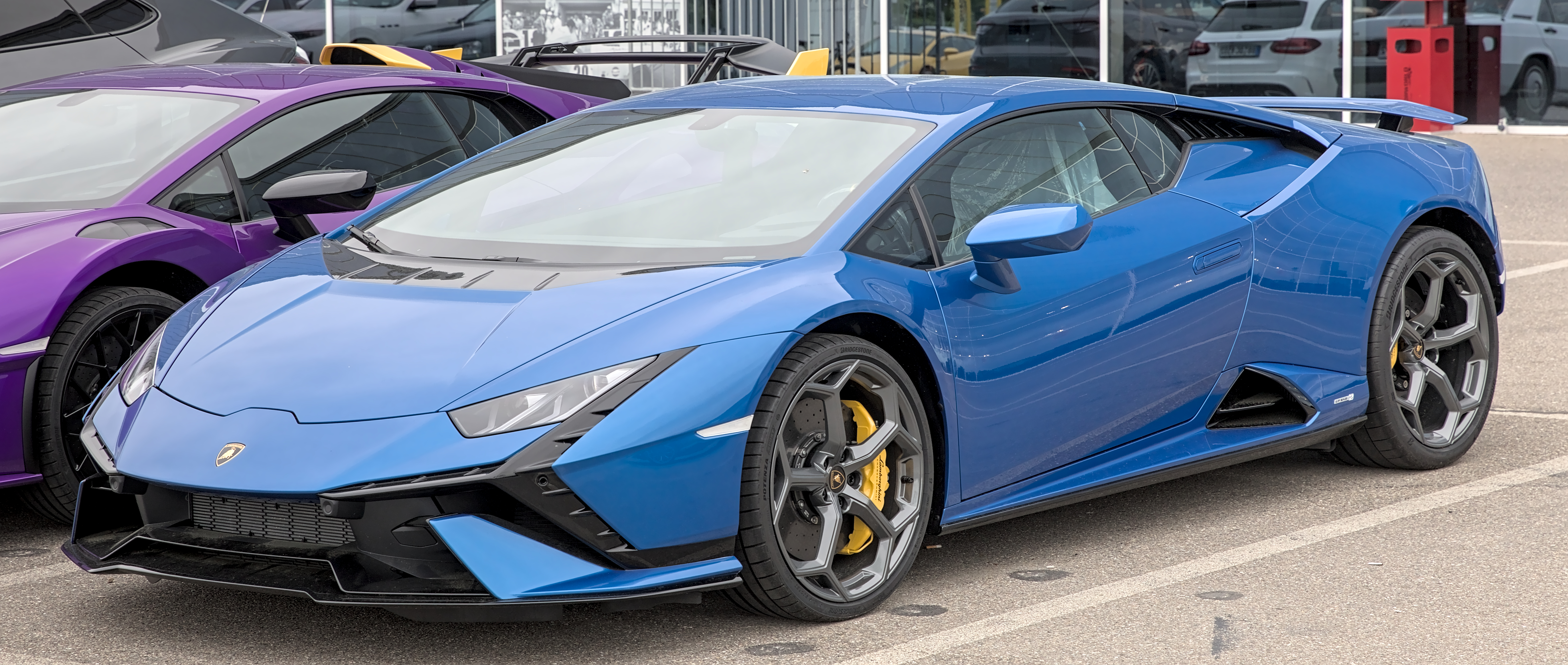
That scenario played out in a Florida shopping centre in April 2026, when Ramón Ferrer was parking his Lamborghini Huracán when a lifted Chevrolet Silverado rode up and over the front end of the car. A crane and a tow truck were needed to separate the two vehicles. One outlet that interviewed Ferrer reported his Huracán may end up a write-off. The financial cleanup that follows illustrates exactly what is at stake for any buyer who finances a car in this category.
When a Financed Supercar Becomes a Total Loss
Insurers declare a vehicle a total loss when estimated repair costs reach a set percentage of the car's pre-accident market value. That threshold sits somewhere between 50% and 75% of the vehicle's value, varying by insurer and jurisdiction.
For a mainstream car worth £30,000, hitting 65% means weighing up around £20,000 in repairs — a large bill, but one where the numbers are broadly predictable. For a Lamborghini Huracán, which starts at around $250,000 (roughly £200,000), 65% is £130,000 in repairs before the insurer declares a total loss. That sounds like a high barrier. For exotic cars, it often is not.
Why the Write-Off Threshold Arrives Faster Than Expected
Supercars are built differently from the ground up. A Huracán uses an aluminium-and-carbon monocoque structure — a chassis architecture that delivers performance but responds badly to having several tonnes of pickup truck parked on top of it. When the structural integrity of a monocoque is in question, the cost of proper assessment and repair escalates rapidly, and the risk of residual hidden damage means no insurer will accept a repair without exhaustive inspection.
The result is that a car presenting with apparently external damage can breach the total-loss threshold faster than the owner expects — because the hidden structural question is expensive to answer, and the answer is often expensive to act on.
Once the insurer decides the car is a write-off, it pays out a figure based on its assessment of the vehicle's market value immediately before the incident. That figure is the settlement. Everything else is the owner's problem.
How Exotic Parts Costs Accelerate the Damage
Even in cases where the insurer chooses to repair rather than write off, the financial exposure is severe. Specialist parts for exotic cars cost 10 to 20 times more than equivalent components on a regular vehicle. A single carbon-fibre hood replacement on a comparable supercar runs to around $15,000 — roughly £12,000 — before fitting. Labour rates at approved specialists are not comparable to a high-street bodyshop.
This parts-cost multiplier is why the 50–75% threshold can be crossed by damage that looks, on the outside, like it might be manageable. What it looks like and what it costs to fix correctly are two different numbers on a supercar.
The Financial Gap Standard Policies Leave
Here is where the write-off becomes a finance problem.
The insurer's market-value settlement is calculated against what the car was worth immediately before the loss. The finance company's outstanding balance is calculated against what you agreed to borrow, plus interest and fees accrued. These two numbers are not required to be the same, and on a depreciating high-value vehicle — or one where the agreed finance terms included a large deferred element — they routinely diverge by a significant amount.
GAP insurance — Guaranteed Asset Protection — exists to cover this shortfall. But standard GAP products sold through mainstream channels are calibrated for mainstream vehicles and mainstream finance structures. A policy with a payout cap that provides genuine protection on a £40,000 family car may represent only a fraction of the actual deficit on a £300,000 exotic.
The policy wording matters too. Some standard GAP products calculate the gap against the vehicle's original invoice price rather than the outstanding finance balance at the point of loss. On a personal contract purchase (PCP) agreement that includes a large balloon payment, or on a finance product where early settlement triggers additional fees, that distinction can determine whether a GAP payout resolves the situation or simply reduces it.
Standard liability cover on the third-party side creates a parallel problem. In jurisdictions with low mandatory minimums, the at-fault driver's policy can be exhausted far below the actual vehicle value — leaving the remainder as a personal liability that, in a case involving a £200,000-plus supercar, can follow someone for years. That is the other party's exposure. On the owner's side, the question is whether their own cover — comprehensive insurance plus GAP — fully extinguishes the finance balance.
What Supercar Finance Buyers Need Instead
Buyers financing exotic and high-value cars above £100,000 need cover structured around the actual exposure, not the mainstream average.
Before signing finance documents, buyers should verify:
- Whether the GAP policy has a monetary cap, and how that cap compares to the realistic maximum difference between insurer settlement and outstanding finance balance on their specific agreement.
- How the settlement figure is defined — against original invoice, outstanding balance, or agreed value — and whether that definition matches the finance structure in place.
- Whether the GAP product covers the vehicle category, since some standard policies exclude cars above a specified value, performance-modified vehicles, or supercars as a class.
- Whether specialist insurers offer agreed-value comprehensive policies that fix the settlement amount upfront, reducing the gap that GAP insurance needs to fill.
- Whether the GAP cover duration matches the finance term, particularly on longer PCP or hire-purchase agreements where the outstanding balance at year three or four may still be substantial.
The finance company will require payments regardless of what the insurer decides. The gap between those two realities — the settlement and the balance — is the specific risk that supercar GAP insurance is supposed to eliminate. Getting the policy structure right before the incident is the only point at which the buyer has full control.
Key Takeaways
- Write-off thresholds of 50–75% of pre-accident value are reached more quickly on exotic cars because specialist parts cost 10–20 times more than mainstream equivalents, and structural assessment is expensive on monocoque-chassis vehicles.
- The insurer's settlement figure and the outstanding finance balance are separate calculations — they diverge based on depreciation, finance structure, and any deferred or balloon payment elements.
- Standard GAP policies are calibrated for mainstream car values; their payout caps may cover a small fraction of the actual shortfall on a financed supercar.
- Policy wording determines what "the gap" means — settlement against invoice price versus outstanding finance balance can produce very different outcomes on PCP agreements.
- Specialist GAP cover, sourced before finance documents are signed and matched to the specific vehicle category and finance structure, is the only reliable way to close the exposure.
Sources
Moneywise — Florida woman's Silverado rolled over a $250K Lambo (26 April 2026)