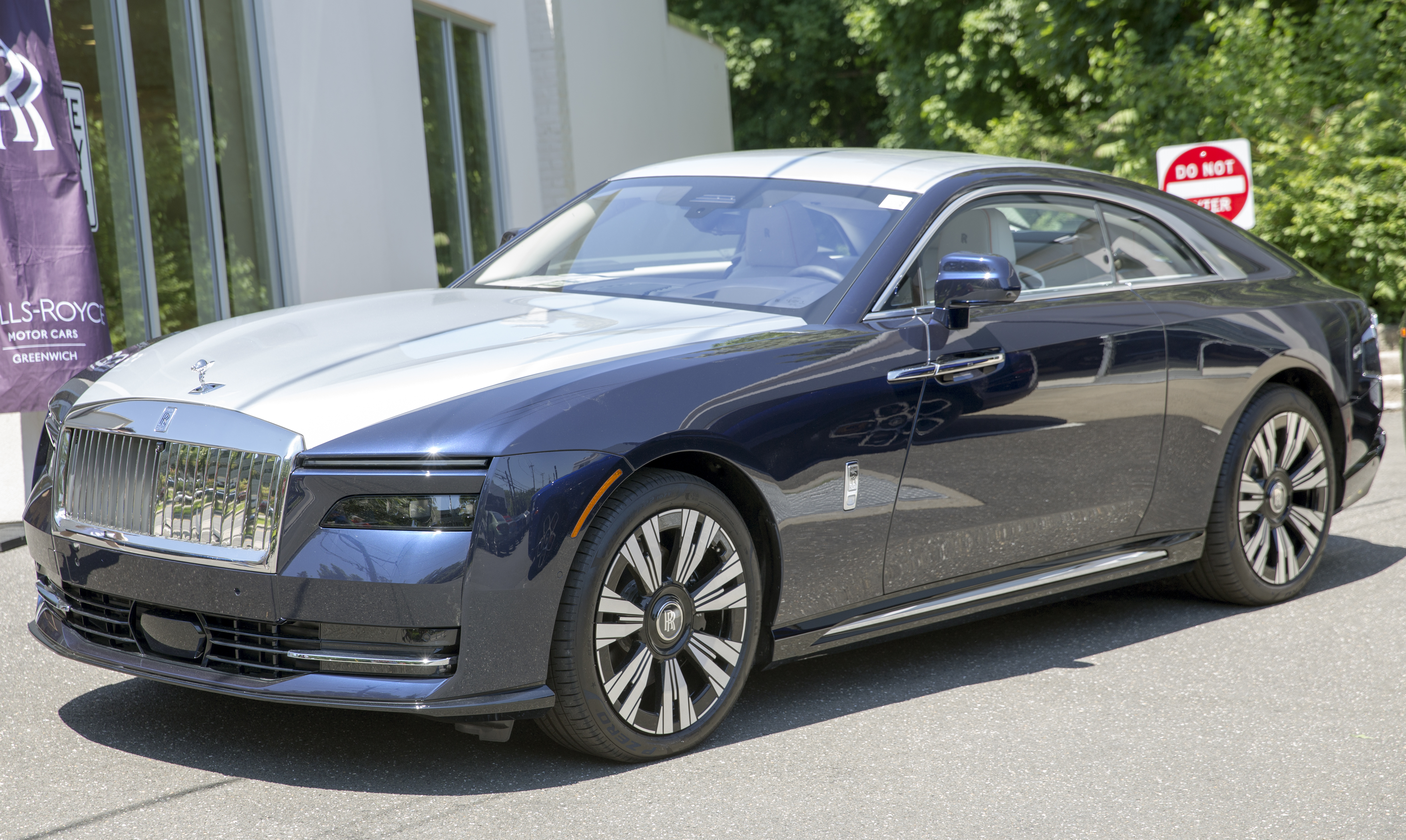
Rolls-Royce Spectre UK: Is the EV Experiment Paying Off?
The Rolls-Royce Spectre is the brand's first all-electric car, but a reversal of the 2030 EV-only pledge raises questions about whether it's finding UK buyers.
- Fifteen Years in the Making
- The Spectre's Place at the Pinnacle of the EV Market
- The Strategic Reversal: V12s Are Staying
- What It Means for UK Buyers
- Key Takeaways
- Sources
The Rolls-Royce Spectre is the Goodwood marque's first all-electric production car, the result of more than a decade of research and development. But as Rolls-Royce has quietly walked back its 2030 EV-only target and reaffirmed its commitment to V12 power, a sharper question is forming in the UK market: is anyone buying it, and does the company still believe in the experiment?
Fifteen Years in the Making
The Spectre did not arrive without groundwork. Rolls-Royce's 2011 Phantom Experimental Electric — the 102EX — gave the brand its first serious encounter with battery-electric technology. Unveiled a year before the Tesla Model S reached customers, the 102EX was not built for sale; it was a rolling laboratory designed to gather data on alternative powertrains, and those learnings fed directly into the Spectre's development.
The lineage runs further back still. The 101EX, shown at the 2006 Geneva Motor Show, introduced the Starlight Headliner, now seen across nearly the entire Rolls-Royce range. The 103EX imagined a future of autonomous, lounge-like interiors and a digital assistant named Eleanor — a nod to Eleanor Thornton, believed to have inspired the Spirit of Ecstasy figurine.
Together, these experimental models chart a deliberate direction. Rolls-Royce has always framed electrification not as a cost-cutting measure but as a technology that could deepen luxury, refinement, and personalization. The Spectre is the first time that vision has reached the road.
The Spectre's Place at the Pinnacle of the EV Market
The Spectre's pricing leaves little ambiguity about its intended buyer. It currently ranks among the most expensive EVs available, with only bespoke electric hypercars such as the Rimac Nevera commanding higher figures. That places it in a segment with few direct competitors and an equally limited pool of potential customers.
For UK buyers, this means the Spectre is not in conversation with a Porsche Taycan or even a Bentley Flying Spur Hybrid on price. It competes — as all Rolls-Royce products do — primarily with itself, set against the Ghost and Phantom in a customer's consideration. The question many dealers are navigating is whether the ultra-wealthy British buyer, traditionally drawn to Rolls-Royce for the meditative quality of a V12 at speed, is willing to exchange combustion refinement for electric silence.
The Strategic Reversal: V12s Are Staying
Perhaps the clearest signal about how the Spectre is performing comes not from a registration chart but from a boardroom decision. Rolls-Royce has reversed its 2030 EV-only target and committed to continuing production of V12-powered models. The about-turn, reported in 2026, indicates that demand for petrol-powered Rolls-Royces — the Ghost, Phantom, and Cullinan — remains strong enough to warrant continued investment in combustion powertrains.
That decision has two plausible readings. One is that the Spectre has not generated sufficient volume or enthusiasm to accelerate an all-electric transition. The other is that Rolls-Royce is managing a customer base that is notoriously conservative and brand-loyal, choosing to serve both audiences simultaneously rather than risk alienating its core buyers with a forced conversion.
What is confirmed either way: Rolls-Royce no longer treats electrification as a one-way door. That is a significant shift from the rhetoric of just a few years ago, when an all-electric future was described as inevitable.
What It Means for UK Buyers
Granular UK registration data for the Spectre has not surfaced in current reporting, making a precise read of domestic sales performance difficult. The ultra-luxury segment operates at volumes that rarely register in national figures — Rolls-Royce produces only a few thousand cars globally per year across all nameplates. Individual model breakdowns are seldom disclosed.
What the available evidence does suggest:
- The Spectre enters a market where it has no direct electric rival within the ultra-luxury tier, giving it a clear if narrow lane
- Rolls-Royce's decision to retain V12 production signals the company is not betting its future on EV demand materialising at pace
- The concept-car heritage behind the Spectre shows the technology has been in active development since 2011, suggesting Rolls-Royce is taking a long view on adoption curves
- The walking-back of the EV-only pledge reframes the Spectre as one option in the range rather than its inevitable direction
For prospective UK buyers, the Spectre remains available — and, given the absence of competition at its price point, genuinely distinctive. But the brand's strategic recalibration makes clear it is no longer being positioned as the future of every Rolls-Royce.
Key Takeaways
- The Rolls-Royce Spectre is the brand's first all-electric production model, developed partly from data gathered during the 2011 102EX experimental programme.
- It is priced among the most expensive EVs on the market, above all but a handful of bespoke electric hypercars.
- Rolls-Royce has reversed its 2030 EV-only pledge and confirmed it will continue producing V12-powered cars alongside the Spectre.
- Specific UK registration figures for the Spectre are not available in current reporting; the ultra-luxury segment produces too few units to appear prominently in headline data.
- The strategic recalibration suggests demand for combustion Rolls-Royces remains robust enough to prevent an accelerated all-electric transition.
Sources
AOL.com — These Rolls-Royce Concepts Changed Luxury Cars Forever (April 11, 2026)