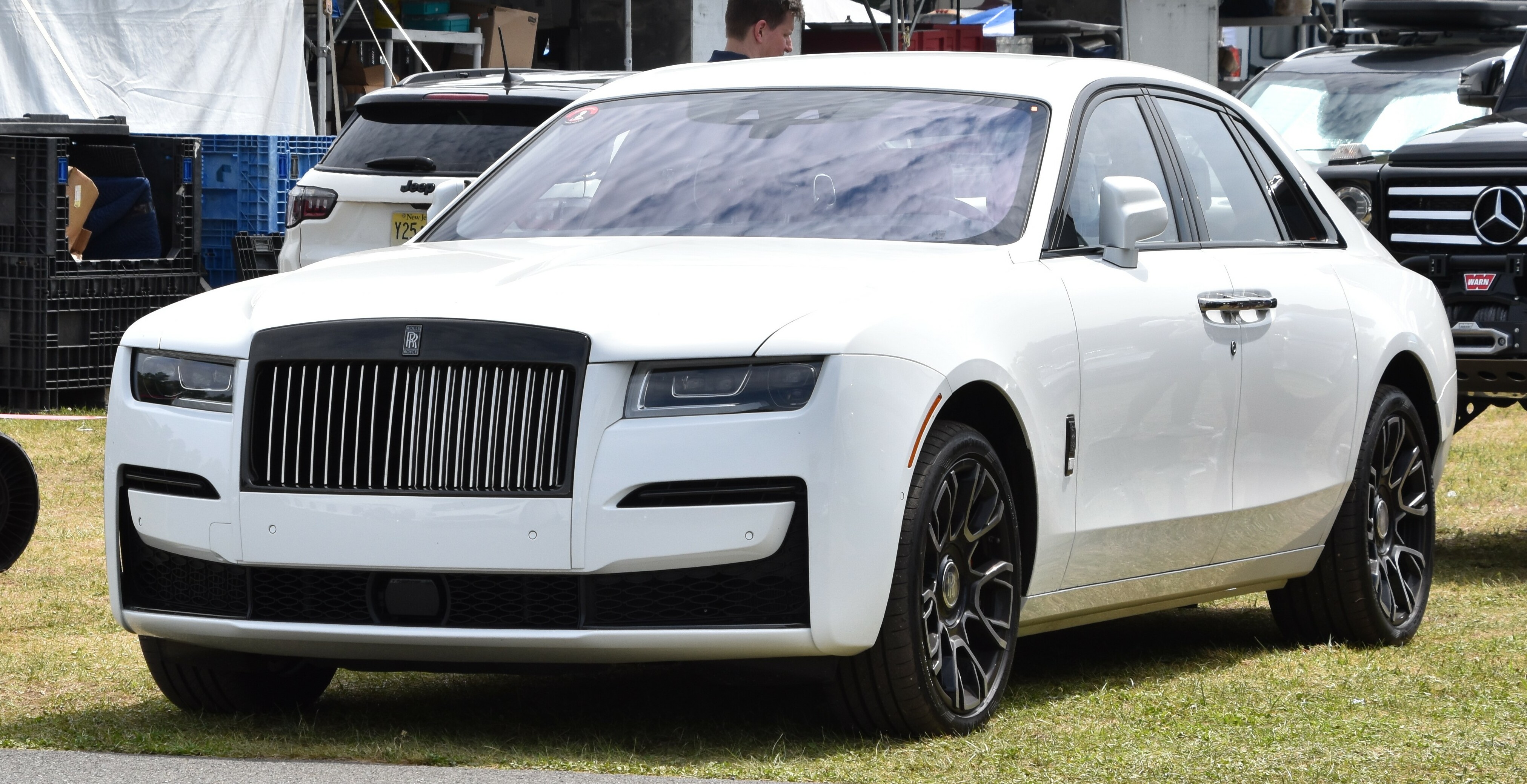
Rolls-Royce Ghost vs Bentley Flying Spur 2026: Which to Buy?
Two dominant ultra-luxury saloons with very different personalities — here's how the Ghost and Flying Spur compare on ride, customisation, and whether the price gap is justified.
- The two cars explained
- Ride quality: magic carpet vs grand tourer
- Customisation depth
- Pricing and value
- Which is the smarter buy?
- Key takeaways
- Sources
The Rolls-Royce Ghost and the Bentley Flying Spur define the ultra-luxury four-door saloon segment in 2026, but they do so in fundamentally different ways. If you're weighing one against the other, the choice comes down to what kind of luxury you actually want — and how much of a premium you're prepared to pay for the ghost that wears a Spirit of Ecstasy.
The two cars explained
The Rolls-Royce Ghost sits below the Phantom in the Rolls-Royce hierarchy, though calling it entry-level is relative: pricing starts well above £200,000 and climbs towards £300,000 once options are added. The Ghost received a significant update in 2025 with the Series II facelift, bringing blockier bumpers, vertical LED running lights, and reworked taillights with what Rolls-Royce describes as a cut-crystal aesthetic — a cue borrowed from the all-electric Spectre.
Underneath, the Ghost sits on Rolls-Royce's proprietary AOL (Architecture of Luxury) platform — an aluminium spaceframe it shares with the Phantom. This was a significant step when the second-generation Ghost arrived in 2021, cutting the platform's former ties to BMW's architecture. The result is a car that is, as Top Gear puts it, "0 per cent Munich, 100 per cent Goodwood."
The Bentley Flying Spur, its closest rival, starts from around £190,200 and tops out near £265,000 in its highest configurations — meaningfully less expensive even at the ceiling.
Ride quality: magic carpet vs grand tourer
This is where the two cars diverge most clearly. The Ghost prioritises serene isolation above all else. Its twin-turbo 6.75-litre V12 — a Rolls-Royce-bespoke engine, not shared with any BMW — produces 563bhp and 627lb ft of torque from just 1,600rpm. That low-rev surge means you never feel the engine working; forward motion simply occurs, silently and inevitably, as if the car is offended by the concept of effort.
Top Gear's review is explicit on the trade-off: the Ghost "can't do the sporting hustle like a Bentley Flying Spur." That's framed as a worthwhile compromise rather than a deficiency — the Ghost is engineered to cosset rather than excite. The Flying Spur's reputation for being the more driver-focused of the two is well established; it is a grand tourer that happens to seat four in extreme comfort, where the Ghost is a rolling sanctum that happens to be capable of covering ground quickly.
For rear-seat passengers in particular, the Ghost's suspension — described in the Top Gear review as feeling "made from 100 per cent real clouds" — is difficult to match. If most of your miles are spent in the back rather than behind the wheel, this matters enormously.
The Black Badge variant of the Ghost adds 29bhp and 37lb ft for buyers who want a sharper edge without crossing to Bentley territory, holding gears longer for brisker acceleration. It closes some of the sporting gap, though the fundamental character remains one of refinement first.
Customisation depth
Rolls-Royce's Bespoke programme has long been an industry benchmark, and the Ghost Series II pushes it further. The 2025 update centred heavily on personalisation: new wood veneers, fabric woven from bamboo, and a dashboard that doubles as a digital picture frame. The fibreoptic Starlight headliner — a long-standing signature — has been extended with more configuration options.
The numbers tell the story: the average options spend on a Ghost already sits at around £30,000 per car, and Rolls-Royce describes the available spec and trim combinations as exceeding "stars in the night sky." An Extended wheelbase variant is available for buyers who want more rear-cabin space without stepping up to the Phantom.
Bentley's Mulliner division offers comparable depth of personalisation for Flying Spur buyers, though the Ghost's Bespoke programme has historically set the standard for sheer breadth of bespoke possibilities at this price point.
Pricing and value
Here the Flying Spur makes its strongest argument. At £190,200 to £265,195 versus a Ghost that can comfortably exceed £300,000 once bespoke options are applied, the Bentley represents a substantial saving — potentially £50,000 to £80,000 or more for comparably specified cars.
Depreciation in this segment is steep for both brands. Ultra-luxury cars lose significant value in the first three years regardless of badge, though Rolls-Royce's exclusivity and the Bespoke programme can support residuals on well-optioned examples. Buyers who specify unusual or particularly elaborate bespoke combinations sometimes find their cars retain value more strongly, as the combination is effectively unique — but this is not a reliable strategy, and both the Ghost and Flying Spur should be viewed as experiences rather than investments.
The dealer experience at Rolls-Royce is often cited as a differentiator. The brand operates a smaller, more exclusive retail network and positions the purchase process as a concierge-style commissioning exercise. Whether that experience justifies the price premium over Bentley's own high standard of customer service is genuinely personal.
Which is the smarter buy?
The Flying Spur is the smarter buy if you enjoy driving and want a car that rewards an enthusiastic pace as readily as it mollycoddles passengers. It is also the smarter buy if budget is a consideration — at up to £80,000 less than a comparably optioned Ghost, it represents exceptional value within the ultra-luxury segment.
The Ghost is the smarter buy if you prioritise the rear seat, treat the cabin as an environment to experience rather than a cockpit to command, and if the Rolls-Royce name — its heritage, its Bespoke programme, and its dealer relationship — matters to you. Top Gear awarded it a 10/10, calling it "a deeply complete, fabulously indulgent and well-engineered execution of the luxury motor car."
If the choice is the Flying Spur Speed versus the Ghost, the Ghost's superior refinement and the step up in brand prestige arguably justifies the cost. If it's a standard Flying Spur versus a heavily optioned Ghost, the Bentley's value case becomes harder to dismiss.
Key takeaways
- The Ghost prioritises ride refinement and rear-seat isolation; the Flying Spur is the more driver-focused option of the two.
- The Flying Spur's price range (£190,200–£265,195) is meaningfully lower than a fully optioned Ghost, which can exceed £300,000.
- Average options spend on a Ghost is already around £30,000 — Rolls-Royce's Bespoke programme is genuinely deep.
- The Ghost's 6.75-litre V12 is a bespoke Rolls-Royce engine, not a BMW carry-over, producing 563bhp and 627lb ft from 1,600rpm.
- Neither car is a sensible depreciation play — buy on experience, not residual value.
Sources
Top Gear — Rolls-Royce Ghost Review 2026 (5 January 2026)