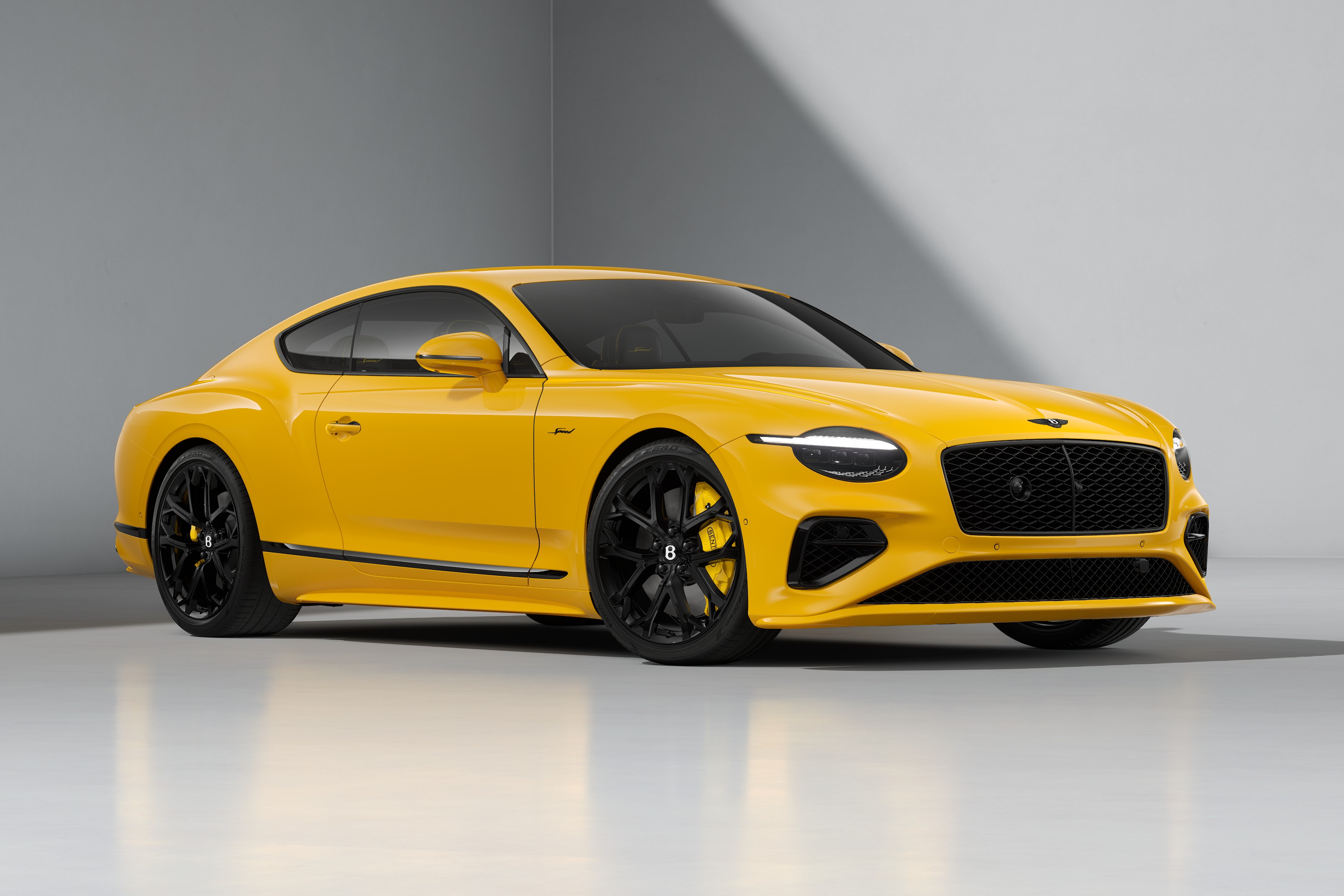
Porsche 911 Turbo S vs Bentley Continental GT: UK Daily Driver
Bentley's new hybrid Continental GT and Porsche's 911 Turbo S both cost supercar money — but which one makes more sense as a car you'd actually live with every day on UK roads?
- Two Very Different Answers to the Same Question
- Ride Comfort: Where the Bentley Makes Its Case
- Performance and Powertrain
- Running Costs and the Hybrid Equation
- Practicality on UK Roads
- Residuals and Long-Term Value
- Key Takeaways
- Sources
Two Very Different Answers to the Same Question
When you're spending north of £200,000 on a car, "daily driver" takes on a particular meaning. For money in that bracket, the Porsche 911 Turbo S and the Bentley Continental GT represent opposing philosophies: one built to thrill first and accommodate second, the other engineered to cosset above all else — while still being genuinely rapid. The 2025–26 Continental GT has just undergone its most significant overhaul since 2018, gaining a plug-in hybrid powertrain, revised suspension geometry, and a weight distribution the old car could only dream of. That changes the comparison more than you might expect.
Ride Comfort: Where the Bentley Makes Its Case
This is the Bentley's natural territory, and the new generation raises the bar considerably. Top Gear describes the Comfort mode ride as "pillowy, downy" — singling it out as perhaps the single best aspect of the way the new Conti drives. That's attributable to the new twin-chamber dampers, which are meaningfully softer in Comfort than before without sacrificing composure in Sport mode.
The chassis revisions go deeper than dampers. Four-wheel steering, active anti-roll bars, an electronic differential, and torque vectoring all sit beneath that familiar body. Most significantly, the move to a plug-in hybrid layout has shifted weight distribution to 49:51 front-to-rear — more weight over the rear axle than the front for the first time in the car's history. For a two-tonne-plus GT, that's a fundamental change in how it responds to inputs.
The Porsche 911 Turbo S, by contrast, prioritises driver engagement. Top Gear notes that the 911 Turbo is "more connected, responsive, agile and raucous" than the Continental GT, but explicitly at the cost of the Bentley's refinement. On broken UK B-roads, that calculus matters. The Bentley's longer wheelbase and air suspension absorb the kind of surface irregularities that would have a low-slung 911 tramping and fidgeting.
Performance and Powertrain
Neither car is slow. The new Continental GT Speed — badged as an Ultra Performance Hybrid — produces 771bhp from a combination of a twin-turbocharged V8 (584bhp) and a rear-axle electric motor (187bhp), with a combined torque figure of 1,000Nm. The result is a 0–62mph time of 3.2 seconds from a car weighing 2,459kg. The convertible GTC version manages 3.4 seconds despite tipping the scales at 2,636kg.
The lesser High Performance Hybrid variant makes do with 671bhp and 686lb ft — figures that still eclipse the outgoing W12 Speed in every key performance metric, according to Bentley.
The 911 Turbo S trades in a very different kind of performance: less mass to move, more tactile feedback, sharper turn-in. For track days and mountain passes it wins convincingly. For the kind of A-road and motorway driving that makes up most UK mileage, the Bentley's effortless torque delivery arguably serves a daily driver better.
Running Costs and the Hybrid Equation
Here the new Bentley makes a genuine argument. The 25.9kWh battery (22.0kWh usable) gives a claimed 50-mile electric range in the GT coupe — enough to cover most UK commutes without touching the V8. Bentley's official CO2 figure of 29g/km should be treated with considerable scepticism given the car's 2,459kg kerb weight, as Top Gear is quick to point out, but the real-world fuel savings on shorter journeys are genuine.
Charging maxes out at 11kW, meaning a full charge from a home wallbox takes around 2.5 hours. There's no rapid-charge capability. Bentley's view, apparently, is that luxurious charging experiences don't exist — so owners will charge at home overnight and leave it at that.
Prices run from £202,400 to £277,860 depending on body style and specification. Insurance groupings at this level are predictably eye-watering for both cars. The Bentley's biennial service intervals and VED exemption (or near-exemption) while running on electricity do provide some offsetting benefit.
Practicality on UK Roads
The Continental GT is, by design, a 2+2. Rear seats exist but are best described as occasional rather than family-friendly. Boot space is more useful than the 911's, and the driving position is commanding without being truck-like. Visibility is reasonable for a car of this width.
The 911 Turbo S, being rear-engined and lower, is the more challenging daily proposition in urban environments — tighter turning circle, more limited forward storage, and a ride that demands smoother surfaces. Neither car is a family estate, but the Bentley is the less compromised commuting tool of the two.
The Continental GT's electric-only mode also means it can navigate clean-air zones and low-emission areas silently and without penalty — an increasingly relevant consideration in UK cities.
Residuals and Long-Term Value
Bentley Continentals have historically held their value well at the top end of the market, underpinned by strong brand cachet and low production volumes. The move to a hybrid powertrain introduces some uncertainty — early plug-in hybrid GTs from other manufacturers have occasionally suffered steeper depreciation as battery technology evolves — but Bentley's ownership demographic tends toward long-term retention rather than short-cycle trading.
Porsche residuals are famously strong across the range, and the 911 Turbo S sits at the top of a lineage that has proven remarkably resistant to depreciation. For buyers concerned about three-year residuals, the Porsche has the better track record. For those buying with intent to keep, the Bentley's running-cost advantage over time — particularly if the electric range is genuinely exploited — may close that gap.
Key Takeaways
- The Bentley Continental GT is the better daily driver for comfort and long-distance refinement; its new twin-chamber dampers deliver a genuinely exceptional Comfort-mode ride.
- The 911 Turbo S is more driver-focused — more connected, agile, and thrilling — but less relaxing on imperfect UK roads.
- The Bentley's hybrid powertrain (771bhp, 1,000Nm, 50-mile claimed EV range) makes a real-world case for urban running costs, though take the 29g/km CO2 figure as a tax benefit rather than a statement of fact.
- Prices start at £202,400 for the Continental GT; at this level both cars attract equivalent insurance costs, but the Bentley's weight means higher tyre wear.
- Residuals favour Porsche historically, but the Bentley's hybrid status and ownership profile may provide better-than-expected retention for long-term keepers.
Sources
Top Gear — Bentley Continental GT Review 2026 (24 Jun 2025)