Porsche 911 GT3 vs McLaren 750S: UK Track Day Verdict
For UK track-day buyers choosing between the Porsche 911 GT3 and McLaren 750S, the GT3 Manthey kit reshapes both the performance case and the cost equation.
- What the GT3 Manthey Kit Costs
- Lap Times and Track Performance
- Suspension: The Manthey Difference
- Running Costs: Brakes and Long-Term Ownership
- Which Car Rewards a Driver Who Uses It Hard?
- Key Takeaways
- Sources
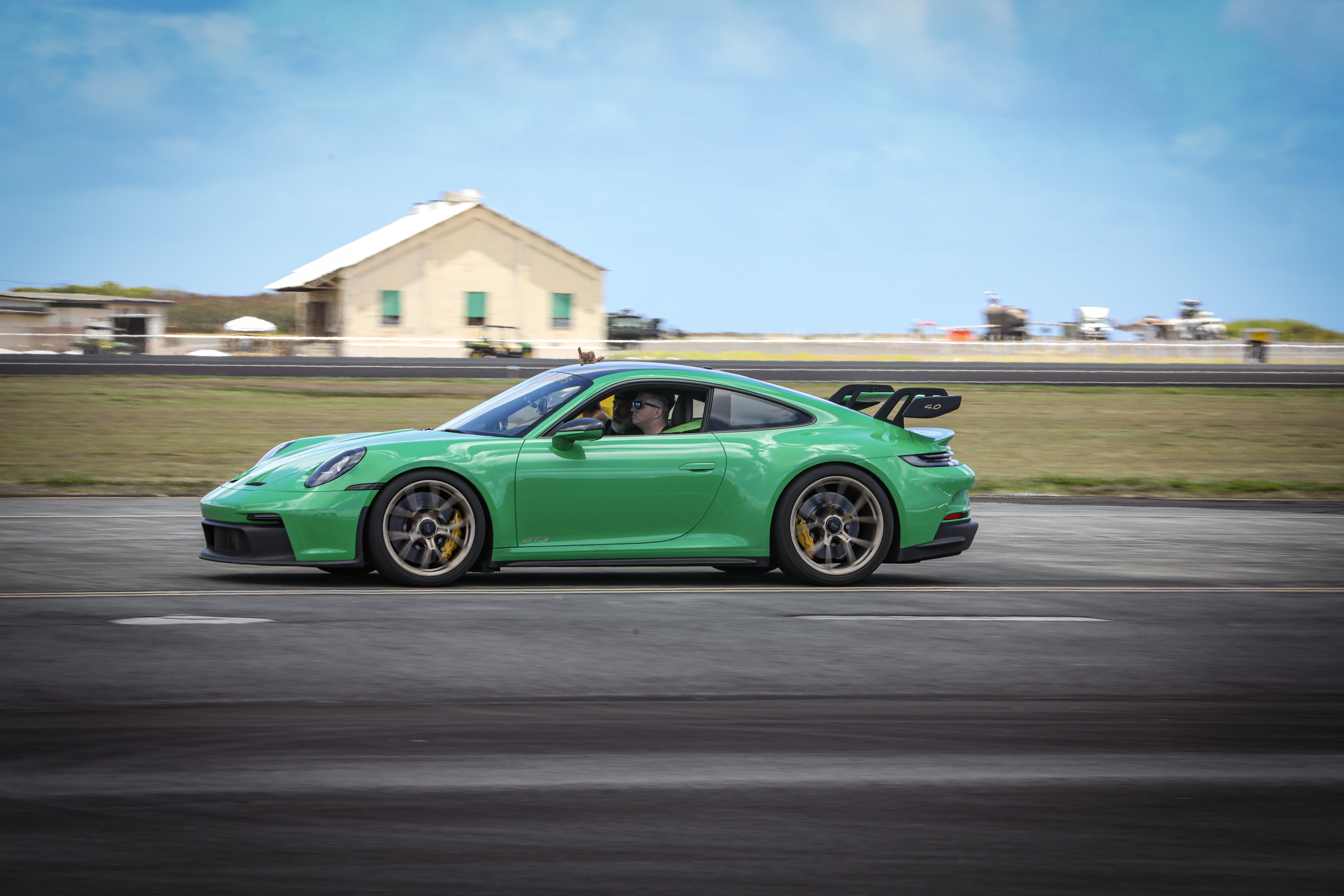
When weighing the Porsche 911 GT3 against the McLaren 750S for UK track days, the comparison just became more complex. A first drive of the GT3 Manthey at Thruxton — the fastest circuit in the country — reveals a £56,000 factory-backed upgrade kit that changes how the car drives at a fundamental level. The McLaren 750S remains the sharper, mid-engined alternative, but Porsche's Manthey option now demands a serious answer on costs, lap times, and driver reward.
What the GT3 Manthey Kit Costs
The 992 GT3 in full Manthey specification starts at £280,517. That figure incorporates the £56,000 Manthey kit — comprising brake, aero, and suspension upgrades — but options can push the total well beyond that.
The reviewed car carried an additional £80,298 in extras: a £12,000 carbon pack, £9,160 lightweight aluminium wheels, £668 tow straps, and Manthey's own brake pads at £1,295 (fronts) and £1,175 (rears). That options list alone is, as Top Gear notes, roughly equivalent to the cost of a new Cayman GT4.
Buyers who want the core performance improvement without the full outlay have one useful option: the suspension kit can be purchased independently through the Manthey parts catalogue without committing to the complete package.
Lap Times and Track Performance
Manthey's claim to faster lap times is backed by a race record few operations can match: seven Nürburgring 24 Hours victories, six Le Mans class wins, two DTM championships in three years, and eight FIA WEC world championships. When Porsche needed to respond to Lamborghini and AMG improving on the GT2 RS's 'Ring lap time, it handed the keys to Manthey — and Lars Kern went from 6m47.3 to 6m43.3, a four-second improvement with the same driver.
More recently, Manthey applied the same treatment to the GT3 RS. Jörg Bergmeister lowered the production lap record from 6m49.3 to 6m45.4 — 3.9 seconds off a car that was already at the sharp end of the Nürburgring leaderboard.
The aero numbers: 540kg of downforce at 177mph, generated despite the Manthey car being cleaner through the air than a standard winged GT3. A 12mm extended splitter routes air beneath the car to a fully reworked underbody with flow elements up to 150cm long, exhausting through a diffuser borrowed from the GT3 RS kit. Larger, curved rear wing endplates and wheel spats reduce turbulence further.
At Thruxton, the reviewer reported carrying more speed through significant sections of the circuit than during previous visits in cars including the AMG One and Aston Valkyrie — a compelling data point, even as an informal benchmark.
Suspension: The Manthey Difference
The suspension changes are, by the reviewer's own assessment, the most important part of the entire package — and the upgrade most worth buying independently.
Front springs are 20% stiffer than the standard GT3; rears are 7% softer. The dampers are built by KW to Manthey's specification and are four-way adjustable (high- and low-speed compression and rebound), though no longer electronically adaptive. Crucially, the difference between Manthey's recommended road and track settings is just two or three clicks.
The counterintuitive result: the GT3 Manthey rides better than a standard GT3. It is described as calmer and softer, flowing over undulating roads rather than reacting sharply to them. On track, the dampers resist roll, squat, and dive in a way that "rounds the edge off every movement" — the effect is more time to react, more confidence to attack, and a car that feels more exploitable rather than more demanding.
The engineering behind this is extensive. Each damper must survive one million compressions, equivalent to 200,000km. During development, the spring failed at 700,000 compressions and the entire process had to restart. Freeze/thaw cycling and salt immersion testing are standard before any component is approved. Porsche, which holds a majority stake in Manthey, insists that every kit part meets factory durability standards — and backs this with an extended warranty of up to 15 years covering Manthey components as official Porsche parts.
Running Costs: Brakes and Long-Term Ownership
Brake pad costs are transparent: £1,295 for fronts, £1,175 for rears. Steel-braided brake hoses are included in the kit as standard, improving pedal feel over the factory rubber hoses. The lightweight 20/21-inch aluminium wheels save 6kg around the car versus the standard items; for buyers chasing further reductions, Manthey offers a magnesium wheel set at around €20,000 (approximately £17,300).
The 15-year extended warranty on Manthey components as factory parts is a meaningful running-cost advantage that separates this from an aftermarket modification. Track use will accelerate consumable wear — brakes, tyres, and fluids — on any car in this class, and buyers using the GT3 Manthey hard should budget accordingly. But the durability engineering means the core kit is not a compromise.
The McLaren 750S carries its own ownership structure, with carbon ceramic brakes standard and servicing costs that reflect the complexity of a mid-engined supercar. A direct comparison on annual servicing and tyre bills requires a back-to-back test on equivalent mileage — the available source material covers the Porsche in detail, but a comprehensive cost comparison demands both cars in the same data set.
Which Car Rewards a Driver Who Uses It Hard?
The GT3 Manthey's argument is specific: it makes the car more exploitable, not merely faster. The suspension tuning is calibrated for driver confidence — a car that appears to "slow the process of driving down" and responds to pace rather than fighting the driver. For someone who regularly attends track days at circuits like Thruxton, Silverstone, or Donington, that distinction matters more than a marginal lap time advantage.
The McLaren 750S takes a different route. Mid-engined, with a more immediate and mechanically demanding character, it rewards commitment and precision in a way that suits some drivers and unsettles others. Its lower entry price relative to a fully-optioned GT3 Manthey is a real factor for buyers who track their cars hard and absorb wear costs over time.
The honest answer for buyers who use their cars rather than garage them: the GT3 Manthey's durability engineering, factory warranty coverage, and composed track manners build a strong case for repeated, high-intensity use. Whether the McLaren 750S is faster or cheaper to own over a season of track days depends on how each car is configured and used — a head-to-head test remains the definitive way to settle it.
Key Takeaways
- The GT3 Manthey kit (£56,000) changes the 911 GT3's character fundamentally — calmer on road, more exploitable on track — and the suspension upgrade alone can be bought separately through the Manthey catalogue.
- Starting price is £280,517; the tested car with all options exceeded £360,000, with the options list alone equivalent to a new Cayman GT4.
- 540kg of downforce at 177mph, generated more efficiently than a standard winged GT3, backed by Nürburgring-proven aero from the GT3 RS programme.
- Front brake pads: £1,295; rears: £1,175. A 15-year Porsche extended warranty covers Manthey components as official factory parts — a significant long-term ownership advantage.
- Manthey's kit shaved 3.9 seconds off the GT3 RS production Nürburgring lap and four seconds off the GT2 RS — consistent, measurable improvement with the same drivers.
Sources
Top Gear — Porsche 911 GT3 Manthey review: first drive (29 Apr 2026)