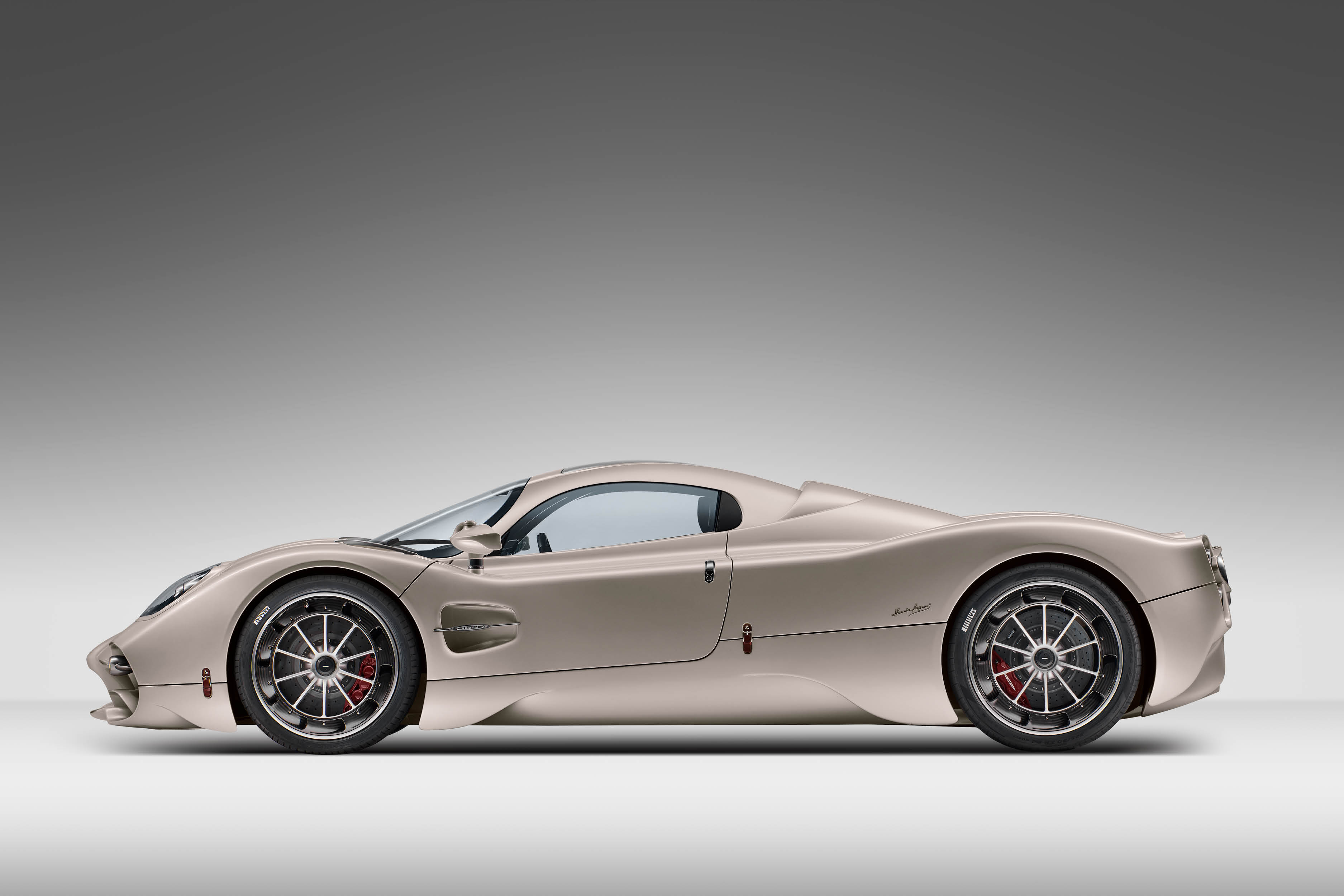
Pagani Utopia UK Road Test: What It's Actually Like to Drive
The Pagani Utopia arrives with a £2.2 million price tag and Italian supercar credentials — but how does the V12 manual hold up when the roads are wet, narrow, and decidedly un-Fiorano?
- First Impressions: Art Before Performance
- The Manual Gearbox Nobody Expected
- How the V12 Behaves in Real Conditions
- Ride, Ergonomics, and Daily Usability
- The Cabin: Baroque Theatre or Sensory Overload?
- Key Takeaways
- Sources
The Pagani Utopia has arrived in right-hand-drive markets with a reputation built on Italian test tracks and carefully staged press events — but early road tests on wet, real-world roads reveal a car that is more accomplished and liveable than its extravagant design suggests.
First Impressions: Art Before Performance
Walk around the Utopia and the first instinct is that Pagani has prioritised sculpture over function. The steampunk wing mirrors are more street lamp than aerodynamic tool. The carbon wheel spats, bronze-finish brake calipers, leather buckles, and roof portholes read like a 1930s vision of the far future. All 99 initial Utopias were sold out a year before anyone saw what it looked like, which tells you everything about the brand's hold on its clients.
The numbers on paper do little to temper expectations: a twin-turbocharged 6.0-litre AMG V12, 811 lb ft of torque, and a price of £2.2 million. On paper, this is a machine that demands wide, dry, warm asphalt.
What nobody expected was how it would behave when the weather turned foul.
The Manual Gearbox Nobody Expected
Perhaps the most surprising detail about the Utopia is that 75 per cent of buyers chose the seven-speed manual over the available automatic — a dogleg first, four planes wide, sourced from British company Xtrac, previously known for supplying the GMA T.50.
That gearbox could easily have been a liability. In practice, it is one of the car's best features. The shift is lighter and sweeter than the mechanical complexity warrants, and there appears to be a deliberate calibration to the self-centring that causes the lever to pause intuitively on the second/third plane during low-speed manoeuvring. Experienced testers who have driven dogleg Astons and wished for an automatic came away from the Utopia without complaint.
The open gate is also — inevitably — a visual delight, with linkages and lever motion on full display as part of the car's broader philosophy of making mechanics visible.
How the V12 Behaves in Real Conditions
The engine is the same basic 6.0-litre AMG block used in previous Paganis, but it has been substantially developed since the early Huayra, where turbocharging robbed it of character. The unit now revs to 6,700rpm, and while that ceiling is modest by supercar standards, the delivery is not.
At low speeds and in wet conditions — the kind of conditions British roads provide year-round — the V12 is tractable and manageable rather than savage. The turbos introduce themselves predictably before delivering what Top Gear's Ollie Marriage described as "a whumping impact" of acceleration once they spool up. Traction control proved robust enough to contain 811 lb ft on wet, snow-dusted roads with track-focused Pirelli Corsa tyres — though the system was kept busy, with wheelspin appearing in lower gears under provocation.
The character of the engine — sharp piston response before boost, followed by exponential push — rewards progressive throttle inputs. On slippery surfaces this is genuinely manageable. On dry roads it is described as explosive.
Ride, Ergonomics, and Daily Usability
This is where the Utopia confounds expectations most directly. The ride is described as supple and composed, the suspension capable of genuine finesse over varied surfaces rather than simply crashing through imperfections in the pursuit of lap times. The car sits on track-focused rubber that would ordinarily demand caution in the wet; the chassis manages the contradiction better than expected.
The driving position is adjustable and natural, with extensive steering column adjustment. Visibility — usually a weakness in cars of this footprint — is better than anticipated, with a curved windscreen that is easy to position around and a rear view that, through carefully placed mirrors and rear glass, actually functions. Parking presents less drama than the bodywork implies.
The clutch is light and progressive, making low-speed urban use far less fraught than the spec sheet might suggest. This is not a car that punishes town driving the way a mid-engine exotic with a heavy racing clutch would.
The Cabin: Baroque Theatre or Sensory Overload?
Inside, the Utopia is unlike anything else on sale. The steering wheel started as a 47kg aluminium billet and was machined over 30 hours to a finished weight of 1.7kg. Across the whole car, 777 individual components were machined from aluminium billet by Pagani in-house. Every surface has something to engage — dials, levers, vents, ornate metalwork, carbon toggles — and the overall effect is of being inside a working watch mechanism.
There is a single infotainment screen, operated by a clickwheel rather than touch, which includes Apple CarPlay. Its presence feels slightly at odds with the analogue philosophy of everything around it, but its compact footprint and physical control method mean it does not disrupt the cabin's character.
Is it excessive? Occasionally. But the critical distinction is that the complexity never frustrates. There are no touchscreen menus to fight, no buried functions, no cold-starting lag. Every control is physical and immediate.
The closest comparison in terms of cockpit experience may be the GMA T.50, which also uses the Xtrac gearbox and shares an obsession with tactility — but the T.50 is taut and direct where the Utopia is flamboyant and relaxed. Different interpretations of the same manual-supercar philosophy.
Key Takeaways
- The Utopia is more usable than it looks. Supple ride, light clutch, manageable V12 delivery, and a natural driving position make it less demanding than its specification implies.
- The seven-speed manual is a genuine highlight. Three-quarters of buyers chose it, and the shift quality justifies that preference — lighter and more intuitive than the layout suggests.
- British weather is not the enemy. Early testing in wet, cold conditions showed the traction control and chassis working cohesively on track-spec tyres, with controlled wheelspin rather than drama.
- The cabin rewards rather than distracts. The visual complexity is real, but every control is physical and instantly accessible — no touchscreen complexity buried in menus.
- All 99 initial cars were sold before the design was revealed. Usability on British roads is largely irrelevant to buyers — but the fact that it delivers is a meaningful surprise.
Sources
Top Gear — "Like driving a baroque theatre": testing the V12, manual Pagani Utopia (16 July 2024)