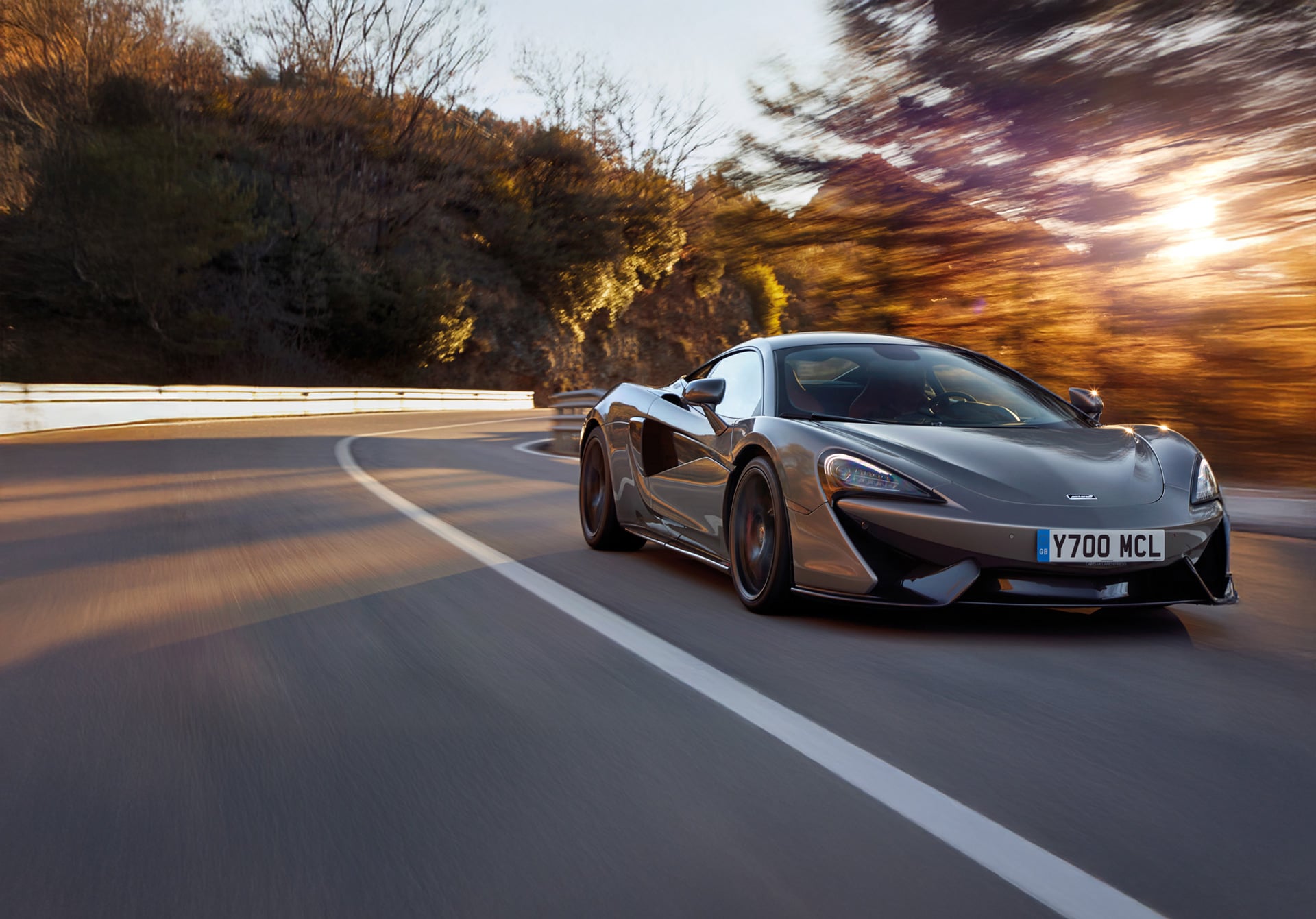
McLaren vs Ferrari Resale Values: Which Brand Depreciates Less?
Comparing McLaren and Ferrari depreciation across the UK used market — Ferrari's residuals hold up significantly better, with McLaren losing up to 25% within three years.
- Ferrari vs McLaren: The Depreciation Gap
- Why Ferrari Holds Its Value Better
- What the Broader Sports Car Market Tells Us
- The Speculative Buyer Problem
- Comparable Price Points: What the Data Shows
- Key Takeaways
- Sources
When buyers drop six-figure sums on a McLaren or Ferrari, resale value is rarely the first thought — but it should be. Ferrari consistently outperforms McLaren on residual values, a pattern confirmed by depreciation analysts and secondary market data across both UK and global classified sales. For buyers comparing the two brands at similar price points, the gap is meaningful.
Ferrari vs McLaren: The Depreciation Gap
The headline figure is straightforward: Italian marques like Ferrari often prove resilient on the used market, while British brands including McLaren and Aston Martin typically shed up to a quarter of their value within three years of purchase.
That 25% three-year loss is a rough industry benchmark for McLaren, not a worst-case scenario. For context, most sports cars lose around 6% of their value after the first year and 20% by year three, according to Hagerty. McLaren sits at or above that upper band; Ferrari tends to sit well below it.
The contrast matters most when buyers are comparing cars at similar transaction prices — say, a McLaren 570S against a Ferrari F8 Tributo, or a McLaren GT against a Ferrari Roma. At similar sticker prices, Ferrari's stronger brand cachet translates directly into better residuals when it comes time to sell.
Why Ferrari Holds Its Value Better
Several structural factors explain Ferrari's residual strength:
- Controlled supply. Ferrari limits production deliberately, keeping used inventory scarce and demand competitive.
- Brand positioning. Ferrari occupies the apex of the performance car hierarchy in a way that justifies premiums across model generations.
- Collector and enthusiast demand. Even relatively recent Ferraris attract strong interest from buyers who view ownership as a long-term hold, not just a daily driver.
- Heritage cachet. Older Ferrari models frequently appreciate rather than depreciate, which lifts the perception of newer cars' residual trajectories.
McLaren, despite producing genuinely exceptional performance cars, faces a different set of market dynamics. The brand is younger, its dealer network smaller, and its cars have developed a reputation — fair or not — for higher ownership costs and reliability concerns compared with Stuttgart or Maranello rivals. These factors consistently weigh on secondary market pricing.
What the Broader Sports Car Market Tells Us
To put the Ferrari-McLaren gap in context, it helps to look at the wider depreciation landscape. The Porsche 911 remains the gold standard for sports car value retention, losing only around 19.5% over five years — a figure that outperforms almost every other performance car. The Chevrolet Corvette C8 holds at roughly 27% over five years, buoyed by sustained demand against a constrained supply.
At the other extreme, the Maserati GranTurismo depreciates at a five-year rate of 65%, dropping from an original MSRP of around $183,995 to an average used retail value of just $65,134. J.D. Power data on 2015-model GranTurismos confirms the carnage: some trims lost 74% of their original value over ten years. That case study is instructive — it demonstrates how brand perception, reliability reputation, and supply flooding can combine to devastate residuals even on a car with genuine Italian flair.
McLaren doesn't approach that level of depreciation, but the direction of travel — faster than Ferrari, slower than true value destroyers — is consistent across market data.
The Speculative Buyer Problem
One depreciation driver that cuts across brands is speculative buying. The Porsche 911 GT2 RS is a prime example: despite being a flagship halo product, it has dropped 30% since launch, largely because early buyers paid well over MSRP expecting values to climb, then found a market that corrected sharply.
McLaren has faced a version of this dynamic on limited-run models — the Senna, the P1, and the Elva all attracted speculator attention that briefly inflated values. When that speculative heat fades, residuals can correct quickly. Ferrari manages this more carefully, often requiring buyers of limited-edition cars to have prior ownership history with the brand, which filters out flippers and supports secondary market pricing.
Comparable Price Points: What the Data Shows
When comparing the two brands at equivalent price points, the directional picture from available market data is consistent:
| Brand | Typical 3-Year Depreciation | Notes |
|---|---|---|
| Ferrari | Below average for the segment | Strong demand, controlled supply |
| McLaren | Up to ~25% in 3 years | Higher ownership costs weigh on residuals |
| Porsche 911 | ~19.5% over 5 years | Best-in-class benchmark |
| Corvette C8 | ~27% over 5 years | High demand, competitive pricing |
It's worth noting that depreciation varies significantly by model within each brand. A Ferrari 296 GTB in a popular spec will hold value differently than an ageing California T. Similarly, a McLaren 750S may depreciate differently than an older 570S facing the competitive pressures of a maturing used market. Buyers should always check current classifieds data for the specific model and specification they're considering, rather than relying on brand-level averages alone.
What the data consistently shows is that Ferrari's brand equity acts as a structural floor under residuals in a way that McLaren has not yet managed to replicate. For buyers who care about the cost of ownership across the full cycle — purchase to sale — that distinction is worth building into the decision.
Key Takeaways
- Ferrari consistently outperforms McLaren on resale values, with McLaren losing up to 25% of its value within three years.
- Ferrari's advantage comes from deliberately controlled production, stronger brand positioning, and deep collector demand that insulates residuals.
- The Porsche 911 remains the broader benchmark for sports car value retention at approximately 19.5% depreciation over five years.
- Speculative buying around limited-edition models can temporarily inflate and then rapidly deflate values across both brands.
- Buyers comparing specific models at similar price points should check live classified data — brand-level averages mask significant model-by-model variation.
Sources
HotCars — The Sports Car That Depreciates Faster Than Any Other Model (April 17, 2026)