McLaren Depreciation UK: Which Models Lose Value Fastest
McLaren depreciation in the UK is among the steepest of any supercar brand — with individual models shedding £40,000–£45,000 in a single year, here's what the data shows and what it means for buyers today.
- The scale of McLaren's depreciation problem
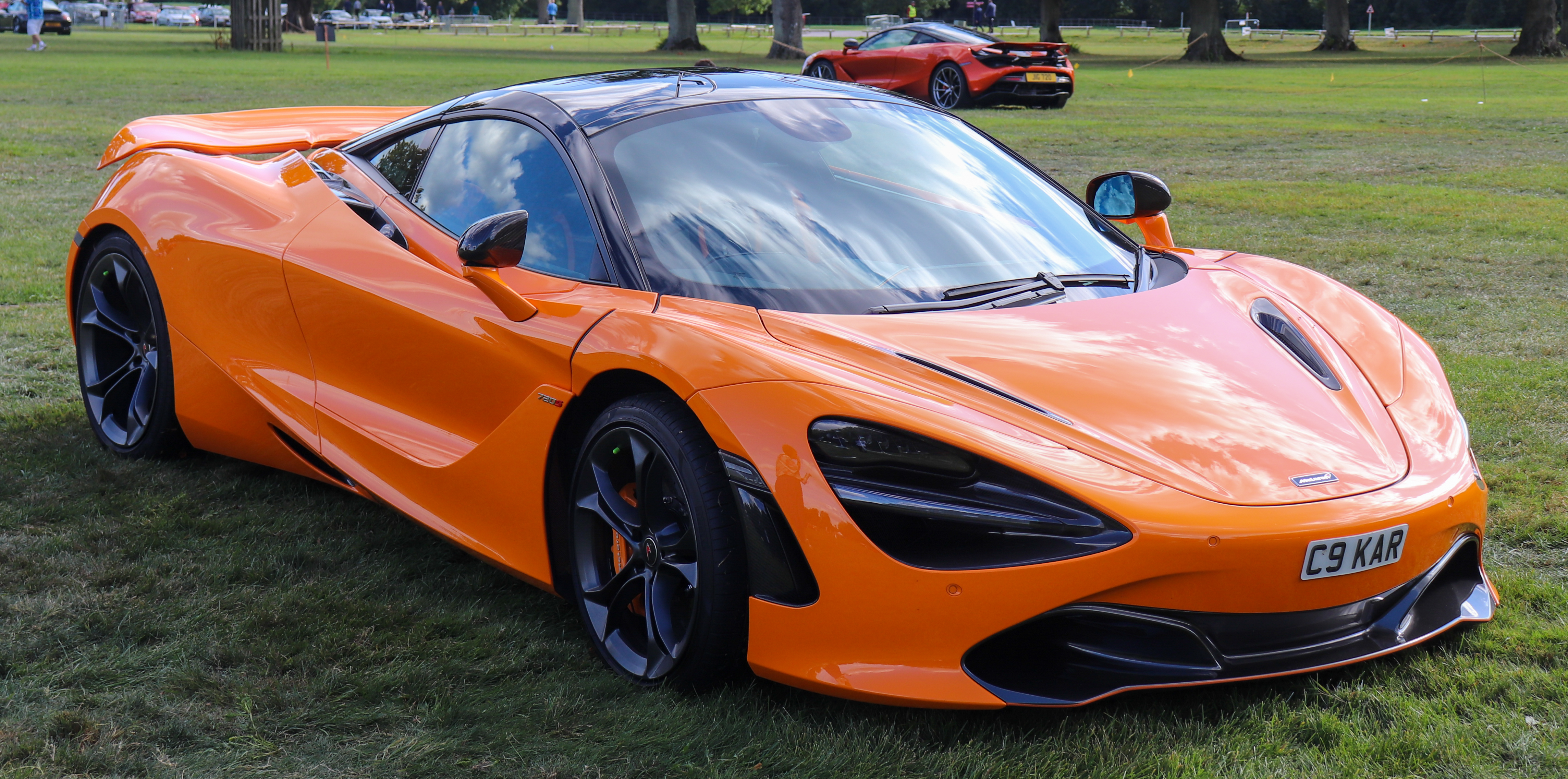
- McLaren 720S: the flagship with a £45,000 annual hit
- McLaren GT: more than 25% gone in year one
- How McLaren compares to Ferrari and Lamborghini
- What drives McLaren's steep value curves
- What this means for buyers looking at used McLarens
- Key takeaways
- Sources
McLaren depreciation in the UK is not a matter of debate — it is one of the most consistent and well-documented value trends in the supercar market. Pricing data compiled by Brego, the AI-driven automotive valuations firm, shows that across the McLaren range, cars routinely lose tens of thousands of pounds within twelve months of leaving the showroom. Understanding the depth of that curve — and how it accelerated under exceptional market stress — is essential for anyone buying or selling a McLaren in the UK today.
The scale of McLaren's depreciation problem
The McLaren brand sits in an unusual position. It builds cars that are technically comparable to — and in many respects superior to — the products of Ferrari and Lamborghini, yet its resale values have consistently lagged behind both rivals. That gap was already visible before the pandemic. What 2020 did was make the scale of it impossible to ignore.
Brego's analysis of the UK used supercar market found that two McLaren models featured in the top five worst depreciators of 2020, with the brand singled out by the firm's CEO as suffering a "huge amount of depreciation compared to their competitors." The drops recorded were not marginal adjustments — they represented life-changing sums of money lost over a single calendar year.
Luxury car dealer Tom Hartley, one of the most experienced hands in the high-end market, told Car Dealer Magazine that luxury car prices across the board fell approximately 30% in 2020 — a figure he described as the worst he had seen in 47 years of trading. McLaren, already prone to steep curves, was hit disproportionately hard.
McLaren 720S: the flagship with a £45,000 annual hit
The 720S is McLaren's core performance product — the car that replaced the 650S and sits at the heart of the range. In 2020 it shed £45,000 in twelve months, placing it third on Brego's list of worst-depreciating supercars in the UK.
That is a significant figure by any measure. For context, a new 720S was priced at approximately £210,000 at launch, meaning a one-year value loss of around 20% was already baked into its ownership profile before the pandemic added extra downward pressure.
Brego's analysis notes that the 720S depreciation curve in 2020 differed from prior years primarily in the spring and summer, when lockdown-driven market disruption accelerated what was already a steep trajectory. The underlying trend — heavy first-year losses — was consistent with the model's pre-pandemic behaviour.
McLaren GT: more than 25% gone in year one
The McLaren GT was positioned as the brand's attempt to broaden its appeal — a grand tourer capable of 200mph while offering real-world practicality. It launched to strong reviews. The residual value story was less flattering.
In 2020, the GT lost £41,000 — more than 25% of its original value within a single year. Brego attributed part of this to the GT's awkward market positioning: it targets buyers who might otherwise consider a Bentley Continental GT, a car that remains the default choice for anyone prioritising long-distance comfort over outright performance. The McLaren simply could not match the Bentley's reputation for refinement, which showed up directly in its used price.
The GT's depreciation rate placed it fifth on Brego's 2020 list — ahead of models from Aston Martin, Bentley, and Lamborghini.
How McLaren compares to Ferrari and Lamborghini
The comparison to its nearest rivals is instructive. Simon Hunt, CEO of Brego, was direct on the point: "We know that McLaren suffers from a huge amount of depreciation compared to their competitors, such as Ferrari and Lamborghini."
The data from 2020 supports this. A Ferrari 812 Superfast topped the worst-depreciation list that year with a £49,000 loss, but Ferrari's catalogue of strong-holding models — the 458 is consistently cited as one of the best-performing used supercars — means the brand's overall depreciation profile is healthier. Lamborghini's Huracán Performante lost just £20,000 in the same period, and the Urus SUV, despite losing £24,000, had the partial cushion of being Lamborghini's most commercially successful model ever.
McLaren had no equivalent of the 458 or the Urus to anchor its residuals. Its entire line-up — 720S, GT, and the broader Sports Series cars — followed a similar steep curve, without the brand halo protection that Ferrari's limited-production specials provide.
What drives McLaren's steep value curves
Several structural factors combine to push McLaren depreciation higher than rivals:
- Production volume relative to demand. McLaren has historically produced cars in greater numbers than the used market can comfortably absorb at near-new prices, which creates supply pressure as earlier models hit the second-hand market.
- Brand positioning without legacy protection. Ferrari and Lamborghini carry decades of motorsport mythology that underpins used values culturally, not just economically. McLaren, despite its F1 heritage, has not translated that into the same floor-value support.
- Rapid model cycles. The pace at which McLaren has introduced new variants — Sports Series, Super Series, Ultimate Series — has compressed the relevance window of each model, depressing used prices as buyers wait for the next release.
- Market sensitivity. As the 2020 data showed, McLarens respond sharply to macro shocks. When buyer confidence drops, discretionary supercar purchases fall first, and McLarens — which sit at the intersection of aspiration and impracticality — are disproportionately affected.
Hunt's assessment was blunt: "All of these manufacturer trends continued in 2020 but with steeper declines than predicted."
What this means for buyers looking at used McLarens
The depreciation data cuts both ways. For first owners, the losses are stark and should be built into any ownership calculation before purchase. For buyers entering the market second-hand — or third-hand — the same curves that punish early ownership create genuine value opportunities.
A McLaren that has shed 25–30% of its value in year one still offers the same engineering, the same performance, and the same driving experience. The capital at risk for a second owner is substantially lower. The question for buyers in 2026 is how far down the curve any given model now sits, and whether further depreciation risk remains meaningful.
Models like the 720S and the GT have had several years of market exposure since the data above was captured. The specific floor values will depend on mileage, specification, service history, and broader supercar market conditions — but the directional picture from Brego's analysis suggests that the steepest value destruction happened early in each model's life, with curves flattening as prices approach a level that represents genuine performance-per-pound value for informed buyers.
Anyone considering a McLaren purchase should track Brego-style valuation data and auction results over rolling six-month windows to identify where the current floor sits before committing.
Key takeaways
- McLaren 720S lost £45,000 in 2020 alone, placing it among the worst-depreciating supercars in the UK that year.
- McLaren GT shed more than 25% of its value in year one, driven partly by its failure to compete with the Bentley Continental GT in the luxury GT segment.
- McLaren depreciates faster than Ferrari and Lamborghini as a brand, a structural trend that predates and outlasted the pandemic.
- The steepest drops occurred in spring and summer 2020, directly linked to lockdown-driven market disruption — but McLaren's depreciation curves were already steep before Covid hit.
- Second-hand buyers benefit from this dynamic: cars that have already absorbed heavy first-year losses represent lower residual risk, provided the buyer does due diligence on specification and provenance.
Sources
Car Dealer Magazine — Top 10 depreciating supercars of 2020 revealed as new data shows used values took a battering (January 30, 2021)