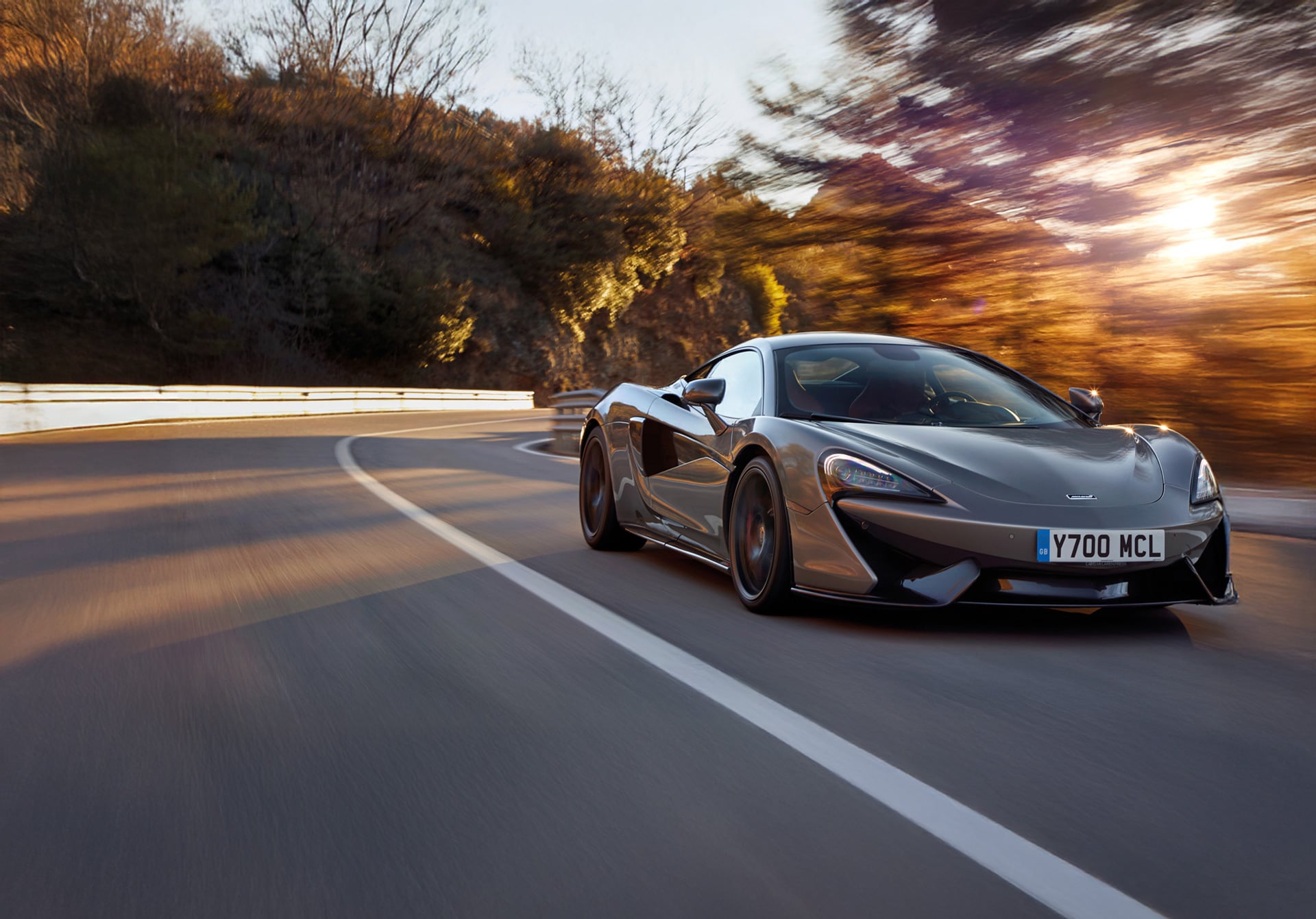
McLaren 570S Used Prices UK: Why They've Fallen and What to Inspect
McLaren 570S prices have dropped to under £70,000 in the UK — here's why values fell, which faults scare buyers, and how to find a sound example.
- Why 570S Prices Have Softened So Sharply
- The Engine Faults That Unnerve Buyers
- Gearbox Problems: The Known Gremlins
- Glass, Corrosion and Suspension Costs
- Bodywork and Wheels: Easy to Miss, Costly to Fix
- How to Find a Good 570S and Avoid a Money Pit
- Key Takeaways
- Sources
You can currently buy a McLaren 570S — a car that will top 200mph and cover 0–60mph in 3.1 seconds — for less than £70,000. That's a headline that would have seemed absurd when the Sports Series launched, and it tells you everything about where values have landed. The depreciation curve is steep, the supply of tired examples is growing, and a reputation for age-related faults has eroded buyer confidence. For those prepared to look carefully, the gap between a bargain and a financial disaster has never been wider.
Why 570S Prices Have Softened So Sharply
The McLaren Sports Series was always positioned as an accessible entry point into the brand — beneath the 650S and 675LT in the hierarchy, designed to attract buyers who might otherwise have chosen a Porsche 911 Turbo or Audi R8. But accessibility at the new-car stage has translated into vulnerability in the used market.
Several forces are converging. The first wave of 570S cars — launched in 2015 — is now a decade old. Running costs on a twin-turbo V8 supercar are not trivial, and sellers motivated to exit are pricing aggressively to move cars quickly. At the same time, a catalogue of known faults has become part of the car's folklore, and every buyer who has read a horror story about a damp damper or a stuck-in-even-gears gearbox adjusts their offer accordingly.
McLaren's reliability reputation is also a factor. The brand improved significantly over the Sports Series generation — as Autocar puts it, the 570 is "not as bad as early McLarens" — but that qualifier does the car no favours. "Not as bad" is not the same as dependable, and perception drives price.
The Engine Faults That Unnerve Buyers
The 3.8-litre twin-turbocharged V8 produces 562bhp and 443lb ft of torque, revs to 8000rpm and is genuinely quick. But it has known weaknesses that any prospective buyer must probe.
Faulty spark plugs, clogged fuel injectors and ignition problems can all cause misfires. On a test drive, watch for a rough idle and any fluctuations in power delivery — these are not quirks to dismiss. Misfires on a high-output turbo engine rarely resolve themselves cheaply.
The engine bay itself deserves close scrutiny. Any sign of deferred servicing — and on cars that are now widely depreciating, there will be some — is a warning sign. McLaren owners were historically diligent about manufacturer-schedule servicing, but as values fall and cars pass through more hands, that culture weakens.
Gearbox Problems: The Known Gremlins
The seven-speed dual-clutch gearbox is normally slick and responsive across all driving modes, but it has a specific and well-documented failure mode: a positioning fault that causes the transmission to select only even-numbered gears. A misplaced locating screw can knock the gear positions out of synchronisation entirely.
Clutch slippage and sluggish gear changes are also reported, though less commonly. The fix for the gear-selection fault involves rectifying the screw position and flushing the gearbox — a job for a specialist, but not a death sentence. What matters is that you know about it before you buy, not after.
On any test drive, cycle through all gears in both automatic and manual modes. If the car skips gears, hesitates, or engages a change with unusual jerkiness, walk away or factor a specialist inspection into your offer.
Glass, Corrosion and Suspension Costs
Three areas tend to catch buyers who rush:
Glass. The lightweight windscreen and rear window used on the 570S are prone to stress fractures. Cracks can appear without obvious impact damage, and replacement glass at supercar prices is not cheap. Inspect both panels in good light, looking for hairline marks at the edges and corners.
Corrosion. The 570S uses aluminium body panels over its carbonfibre Monocell tub — a materials combination that saved weight but introduced a vulnerability. Aluminium was not always treated correctly before painting during production, and corrosion can establish itself on the doors, front and rear wings, and engine cover. Check carefully in raking light. Surface corrosion might polish out; structural corrosion is a different conversation entirely.
Front dampers. A clunking noise when riding over bumps at low speed is frequently caused by leaking front dampers, and this is one of the most significant cost exposures in the used 570S market. Even refurbished replacements can exceed £1,500, and original-specification parts are more expensive still. If you hear the clunk, price accordingly.
Bodywork and Wheels: Easy to Miss, Costly to Fix
The 570S's dihedral doors — they hinge upward and forward rather than swinging out conventionally — are a theatrical party piece, but the leading edges are exposed and regularly pick up scuffs when owners misjudge clearances. Inspect the door edges carefully.
The diamond-cut alloy wheels are another known trouble spot. "White worm" — a form of corrosion that appears as pale, threadlike marks on machined alloy surfaces — can develop and is expensive to correct properly. A cheap refurb will not last; a proper diamond-cut refinish done by a specialist costs significantly more.
Also check the front splitter. If the car was not equipped with McLaren's nose-lift system — or if the lift wasn't used consistently over speed bumps — the splitter will almost certainly show scrape damage.
How to Find a Good 570S and Avoid a Money Pit
The fundamentals of buying well haven't changed, but the stakes are higher as prices fall and the supply of poorly maintained cars increases.
- Prioritise full McLaren service history. Mileage matters less than maintenance. A 570S with 30,000 miles and a complete manufacturer history is a safer prospect than a 15,000-mile car that was serviced sporadically or cheaply.
- Use an independent specialist. McLaren dealerships are the obvious choice for service and inspection, but respected independent specialists include Thorney Motorsport in Northampton, XPI Technical in Essex and V Engineering in Berkshire. A pre-purchase inspection from one of these will cost a few hundred pounds and could save tens of thousands.
- Drive it, don't just look at it. Many of the 570S's known issues — misfires, gear faults, damper clunks — only manifest under load or at temperature. A static inspection is not enough.
- Consider the 570GT for better touring use. The GT variant, which arrived in 2017, has softer spring rates and a 220-litre "Touring deck" accessed via a side-hinged glass hatch. It commands prices closer to £80,000 but adds practicality. The 570GT Sport Pack, which combines GT body and suspension with the 570S's steering and Pirelli Corsa tyres, is a rare find but worth pursuing.
- Check every option works. Infotainment, B&O audio if fitted, nose lift, adaptive damper modes — verify each one functions. Repairs to optional equipment on a depreciated car may not make economic sense to the seller, who may have learned to live without them.
Key Takeaways
- The McLaren 570S can now be bought for under £70,000 in the UK — a 200mph car at new mid-range SUV money — but the discount reflects real risk as well as depreciation.
- The most financially painful issues are leaking front dampers (refurbished replacements exceed £1,500), gearbox even-gear faults, and aluminium corrosion that was baked in at the factory.
- Glass stress fractures in the windscreen and rear window are a quiet hazard; inspect both panels in good light before committing.
- Diamond-cut alloy corrosion ("white worm") and dihedral door edge scuffs are cosmetic but expensive to address properly.
- Full manufacturer service history is the single biggest filter between a sound car and a liability. Mileage is secondary.
Sources
Autocar — Used McLaren 570S 2015-2019 review (3 December 2025)