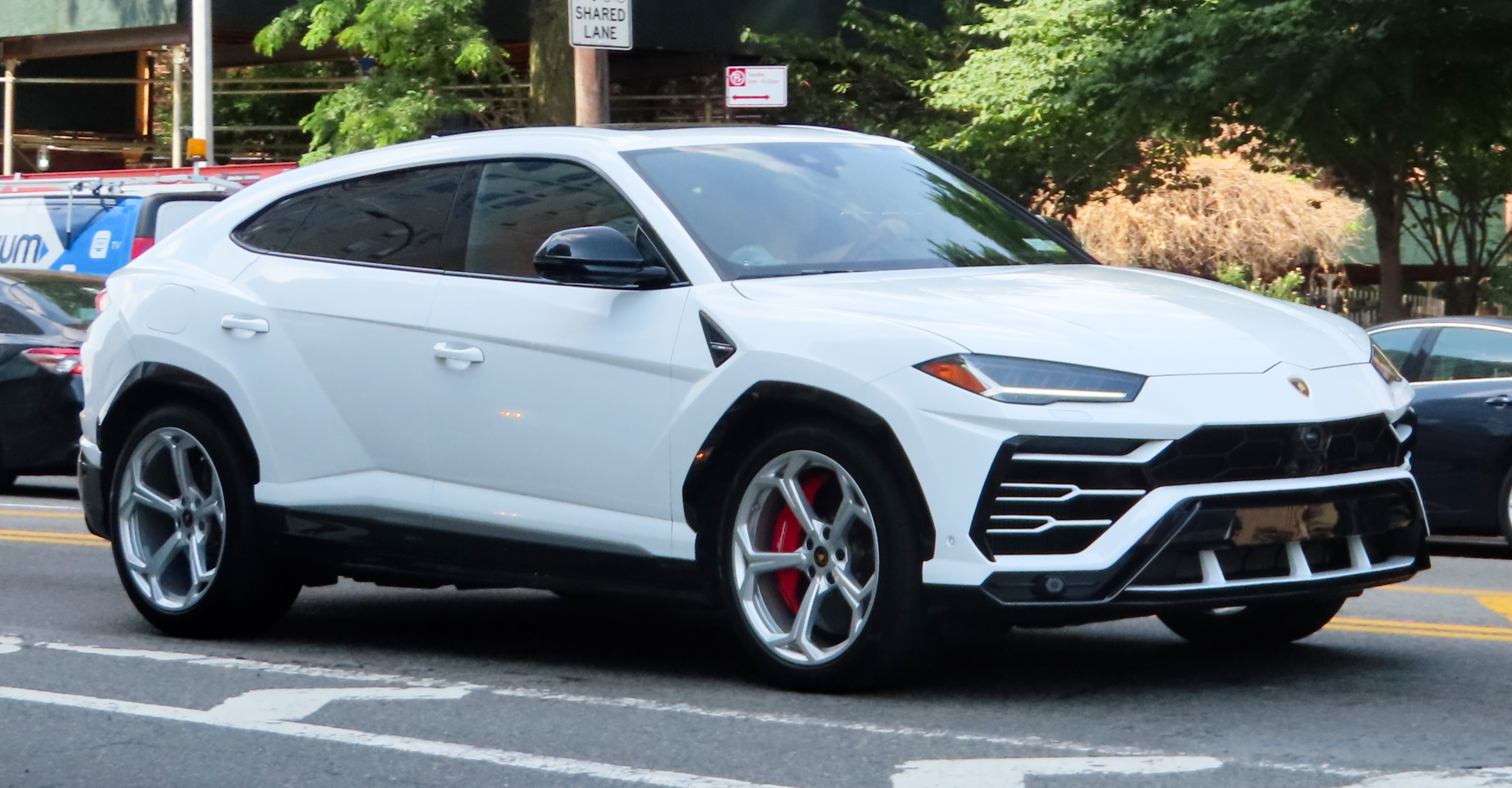
Lamborghini Urus vs Range Rover Sport: UK Depreciation Compared
Which performance SUV costs less to own over four years? UK resale data for the Range Rover Sport reveals strong residuals — here's what buyers need to know before choosing.
- Why Depreciation Matters for Performance SUVs
- Range Rover Sport Residual Values: What the Data Shows
- Lamborghini Urus: The Supercar SUV Benchmark
- Purchase Price vs Total Cost of Ownership
- Which Is the Smarter Financial Decision?
- Key Takeaways
- Sources
For buyers weighing the Lamborghini Urus against the Range Rover Sport, the sticker price is only part of the equation. Depreciation — how much value each car sheds over the first few years — can dwarf every other running cost. UK resale data shows the Range Rover Sport punches well above its weight for residual value retention, making the financial argument between these two performance SUVs more nuanced than their badge prices suggest.
Why Depreciation Matters for Performance SUVs
Premium and performance SUVs sit in a peculiar market position. They command six-figure list prices, attract buyers who replace vehicles every three to four years, and face a narrower pool of used-car buyers who can actually afford them. That combination typically accelerates depreciation relative to mainstream models.
Yet not all luxury SUVs depreciate equally. The brand, the model's desirability, the supply of new units, and the breadth of the used-car audience all shape the resale curve. Understanding which car loses less money per year — not just which one costs less to buy — is the real measure of value in this segment.
Range Rover Sport Residual Values: What the Data Shows
According to Auto Express's twin test of the Range Rover Sport and Audi Q7, the third-generation Range Rover Sport retains 69.7 per cent of its original value after three years and 36,000 miles — a result the publication called "an impressive feat" relative to the wider new-car market.
In cash terms, on a D300 Dynamic SE priced at £83,325, that works out to losing just over £25,000 across three years. Spread over 36 months, that is roughly £694 per month in depreciation alone — significant, but considerably less brutal than many rivals in the segment.
For context, the Audi Q7 — a direct competitor in the premium diesel SUV space — retains only 55 per cent of its value over the same period, meaning it sheds nearly £40,000 on a similarly priced example. That is a £15,000 advantage in favour of the Range Rover Sport over three years, simply on residual value.
What drives the Sport's strong residuals? Several factors converge:
- Brand desirability. Range Rover remains aspirational in the UK used market, sustaining demand for low-mileage examples.
- Powertrain breadth. The Sport is available as a diesel, PHEV, and V8 petrol, giving buyers more entry points into used examples.
- Scarcity management. Land Rover's production constraints have historically kept used supply tighter than demand.
Lamborghini Urus: The Supercar SUV Benchmark
The Lamborghini Urus operates in a different financial stratosphere. With a UK list price starting above £200,000 — more than double the Range Rover Sport's entry point — it targets a buyer who, by definition, is purchasing a very different kind of asset.
Specific UK resale curve data for the Urus was not available in the sources consulted for this article, which limits a precise head-to-head depreciation comparison. What is broadly understood from the wider automotive market is that ultra-premium, low-volume supercars can exhibit either remarkably strong residuals (when demand outstrips supply) or steeper-than-expected drops (when the novelty cycle turns). The Urus has generally held value well since its 2018 launch, partly because Lamborghini's production is intentionally constrained — but buyers should seek current CAP HPI or Glasses Guide data for up-to-date UK figures before committing.
Purchase Price vs Total Cost of Ownership
The gap in purchase price between the two vehicles makes direct depreciation percentage comparisons somewhat misleading. Even if the Urus retains a higher percentage of its value than the Range Rover Sport, the absolute cash loss on a £200,000+ vehicle can still dwarf the Sport's three-year depreciation figure.
Consider a simplified scenario:
| Vehicle | Approx. UK List Price | 3-Year Residual (%) | Approx. Cash Loss |
|---|---|---|---|
| Range Rover Sport D300 Dynamic SE | £83,325 | 69.7% | ~£25,200 |
| Urus (indicative, based on market reports) | £200,000+ | Variable | Potentially £40,000–£70,000+ |
Note: Urus figures are indicative; consult live valuations for current data.
Running costs compound the difference further. The Range Rover Sport's 3.0-litre diesel returned 27.8mpg in real-world testing, with £520 annual road tax. The Urus, with a 4.0-litre twin-turbocharged V8, will attract significantly higher fuel costs and insurance premiums.
Which Is the Smarter Financial Decision?
For UK buyers primarily motivated by minimising total cost of ownership, the Range Rover Sport makes a compelling case. Its 69.7 per cent three-year residual value is genuinely strong for a luxury SUV at this price point, and its running costs — while not cheap — are far more predictable and manageable than those of a supercar-derived SUV.
The Urus is a different proposition. If you are buying it as a daily driver with emotional and performance value built into the decision, the financial calculus changes. Some Urus owners treat depreciation as the price of access to Lamborghini's performance and status. Others buy used examples with the steepest depreciation already absorbed by the first owner.
The key variable is holding period. Buyers who change cars every two to three years will find the Range Rover Sport's strong residuals directly protect their equity. Those buying the Urus new and planning to sell within three years carry considerably more depreciation risk — and should budget accordingly.
Key Takeaways
- The Range Rover Sport retains 69.7% of its value after three years and 36,000 miles, losing around £25,000 on an £83,325 example — strong by segment standards.
- The Audi Q7 loses nearly £40,000 over the same period, illustrating that the Range Rover Sport's residuals genuinely outperform premium rivals at similar price points.
- The Lamborghini Urus lists at more than double the Range Rover Sport's price, so even a comparable residual percentage translates to a significantly larger cash loss.
- Buyers most concerned with minimising depreciation exposure should prioritise the Range Rover Sport; those for whom the Urus's performance and prestige justify the cost should seek current CAP HPI data before purchasing new.
- Holding period matters: three years or fewer places much more financial weight on depreciation than on reliability or running costs.
Sources
Auto Express — Range Rover Sport vs Audi Q7: 2022 twin test review (10 December 2022)