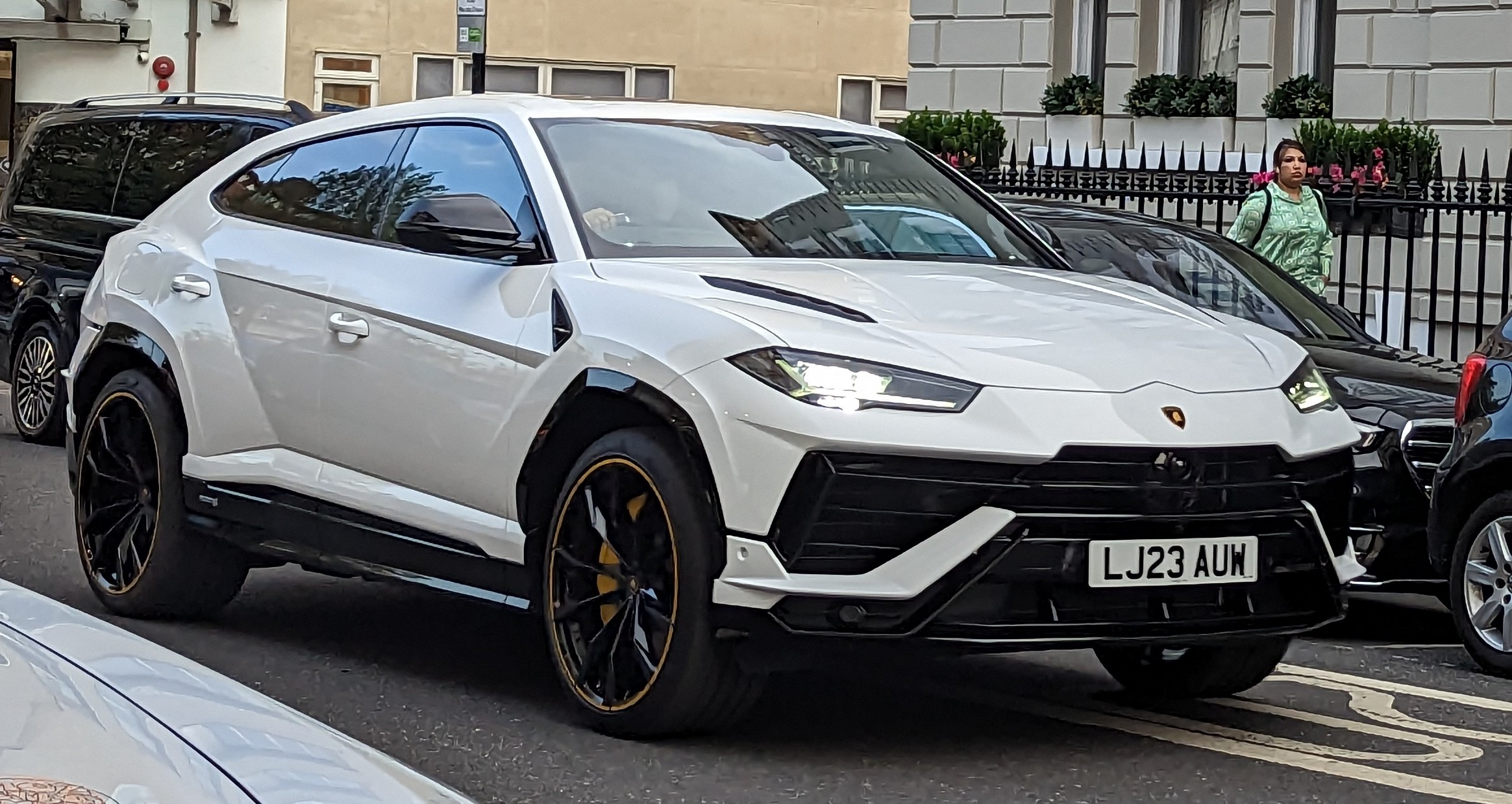
Lamborghini Urus: Brake Dust and Cabin Noise in UK Ownership
UK Lamborghini Urus owners report brake dust and cabin noise issues — here's what CCB testing and platform data reveal about real-world NVH.
- The Urus's Carbon Ceramic Braking System
- Brake Dust: What CCBs Actually Change
- Brake Sensitivity and Daily Driving
- Cabin Noise and the VW Platform Factor
- TSBs and Dealer Response: What's Known
- Key Takeaways
The Lamborghini Urus attracts consistent questions about brake dust and cabin noise from UK owners — concerns that benefit from a closer look at the hardware Lamborghini fitted and the shared platform the car sits on. The answers are more nuanced than most forum threads suggest, and they depend heavily on which variant of the Urus you own.
The Urus's Carbon Ceramic Braking System
The current Urus SE — the plug-in hybrid that now represents the only Urus remaining on sale after Lamborghini discontinued the S and Performante variants — carries a braking package that the manufacturer claims is the largest ever fitted to a production car. As tested by Popular Mechanics in May 2025, the front axle runs 17.3-inch carbon ceramic rotors with 10-piston calipers; the rear axle runs 14.5-inch rotors with single-piston calipers.
The scale is justified by the car's mass. At 5,523 pounds (roughly 2,506 kg), the Urus needs substantial hardware to achieve its claimed 36.6-yard stop from 62 mph. On the SE, carbon ceramic brakes (CCBs) are standard equipment — not an optional upgrade — which shapes the brake dust conversation in a specific direction.
Brake Dust: What CCBs Actually Change
Carbon ceramic brakes produce considerably less dust than conventional steel rotors — a well-established material property that Popular Mechanics specifically highlighted as one of the Urus SE's practical daily-use advantages. The particulate shed by CCBs is lighter in colour and lower in quantity than ferrous dust from steel discs, meaning the car's 22-inch wheels stay cleaner between washes.
The geometry of those large-diameter wheels also works in owners' favour: the clearance between rotor and wheel rim is described as "surprising," making it straightforward to clean inside the wheel with standard detailing tools.
The trade-off is cost. Carbon ceramic rotors carry a significantly higher replacement bill than steel equivalents when pads and discs eventually need changing — a consideration that weighs increasingly heavily as the Urus moves out of its warranty period and into the ownership cycle where brake refresh becomes a realistic near-term expense.
Brake Sensitivity and Daily Driving
Where the Urus braking system generates more consistent complaints is pedal feel in everyday use. Popular Mechanics' 2025 Urus SE test concluded that the large CCBs "tend to be very sensitive," making the car "not very easy to drive smoothly around town." The brakes also require a warm-up period before reaching their optimal performance window — behaviour that differs notably from steel disc setups, which work from cold without the same bedding-in effect.
This sensitivity is a characteristic of high-specification CCB packages, not a manufacturing fault, and is unlikely to be addressed by a Technical Service Bulletin. On UK roads, where stop-start urban traffic is routine and cold starts in wet conditions are common, drivers unfamiliar with CCB behaviour can find the initial bite sharper than expected — particularly after an overnight park.
The high ABS intervention threshold is a related characteristic. Popular Mechanics observed it was possible to "just about stand on the brake pedal without triggering the ABS," a reflection of the Urus's enormous tyre contact patch (11.2-inch-wide tyres at the front, 12.4-inch at the rear). That's impressive on a test track; it requires familiarisation on public roads.
Cabin Noise and the VW Platform Factor
Published data specifically documenting UK Urus owner NVH complaints is not captured in the independent sources reviewed here, but the car's architecture provides important structural context. The Urus is built on a Volkswagen Group platform shared with the Audi RSQ8 — a point noted consistently on PistonHeads UK forums, where the car has been characterised as "a RSQ8 in a posh frock" and debated extensively on grounds of value relative to its platform origins.
That shared architecture means the Urus's fundamental acoustic envelope — firewall insulation, door seal design, suspension geometry — starts from a structure developed for volume-production VW Group SUVs rather than a bespoke Lamborghini structure. Lamborghini applies its own tuning and materials on top, but the starting point is not a clean-sheet acoustic design. For buyers coming from genuinely bespoke super-SUVs, the difference in foundational NVH refinement is perceptible.
The wheel and tyre specification compounds this on British roads. Large-diameter, low-profile tyres on 22-inch rims transmit road texture more directly than smaller setups, and UK secondary roads — with their coarser chip-and-spray surfaces — amplify tyre roar compared to the smoother Continental surfaces where such cars are typically developed and calibrated.
TSBs and Dealer Response: What's Known
No Technical Service Bulletins specifically addressing Urus brake dust accumulation or cabin noise have been identified in the sources available for this article. That gap reflects the limited public disclosure of manufacturer TSBs in the UK market generally, rather than necessarily indicating the absence of any dealer-level guidance or service action.
UK Lamborghini owners experiencing brake or NVH concerns within warranty should raise them directly with the authorised dealer network. The brand's strong residual values and sustained demand — discussed on PistonHeads as evidence of genuine desirability, with one contributor noting that every UK Urus sold since 2018 had retained or exceeded its list price — give Lamborghini UK clear commercial motivation to handle in-warranty complaints attentively.
For post-warranty owners, CCBs require specific expertise to service correctly; incorrect bedding-in after a pad change can permanently affect rotor performance. Independent specialists experienced with VW Group platforms can handle many other Urus components at reduced cost compared to franchised dealers, but brake system work on CCB-equipped vehicles is an area where marque-specific knowledge and tooling matter.
Key Takeaways
- The Urus SE's standard carbon ceramic brakes produce significantly less dust than steel disc alternatives — CCB fitment materially reduces the wheel-staining issue.
- Brake sensitivity, not dust, is the more consistent daily driving complaint; CCBs require warm-up and have a sharper initial bite than conventional systems.
- The Urus's NVH profile is shaped by its shared Volkswagen Group platform with the Audi RSQ8; the acoustic architecture is not bespoke to Lamborghini.
- Large-diameter, low-profile tyres amplify road noise on UK secondary surfaces — a characteristic of the specification, not a factory fault.
- No public TSBs specifically addressing Urus brake dust or cabin noise have been identified; in-warranty concerns should be directed to the authorised dealer network.
Sources
Popular Mechanics — Lamborghini's New Super SUV Is Rocking Some of the Biggest Brakes Ever (May 2025) PistonHeads UK — RE: Lamborghini Urus Performante | PH Review (October 2022) autoevolution — Larte Design Touches the Lamborghini Urus S With Its Tuning Stick (October 2025)