Ferrari Used Car Prices UK 2026: The 400 Series Is Up 57%
Ferrari used car prices in the UK tell a sharply differentiated story in 2026 — the classic 400 family has risen 57% over five years, but condition and gearbox choice split values by more than £30,000.
- Why the Classic 400 Family Is the UK Ferrari Benchmark
- Model-by-Model Price Index: 365 GT4, 400, 400i, 412
- What Is Driving Appreciation?
- Auction Evidence: Paris and Munich Set the Tone
- Where Values Can Still Collapse
- Key Takeaways
- Sources
Ferrari used car prices in the UK in 2026 are not a single story. Across the brand's back catalogue, values diverge sharply by model, specification, condition, and — in some cases — by a single pedal: the clutch. Nowhere is that clearer than in the classic 400 family, a four-model lineage spanning the 1970s through 1990s that has quietly become one of the most closely watched segments in the UK collector market. According to Hagerty UK's valuation data, excellent-condition 400 prices have climbed 57% over the past five years, reaching £62,600 on the Price Guide as of early 2026 — and the trend is still running.
Why the Classic 400 Family Is the UK Ferrari Benchmark
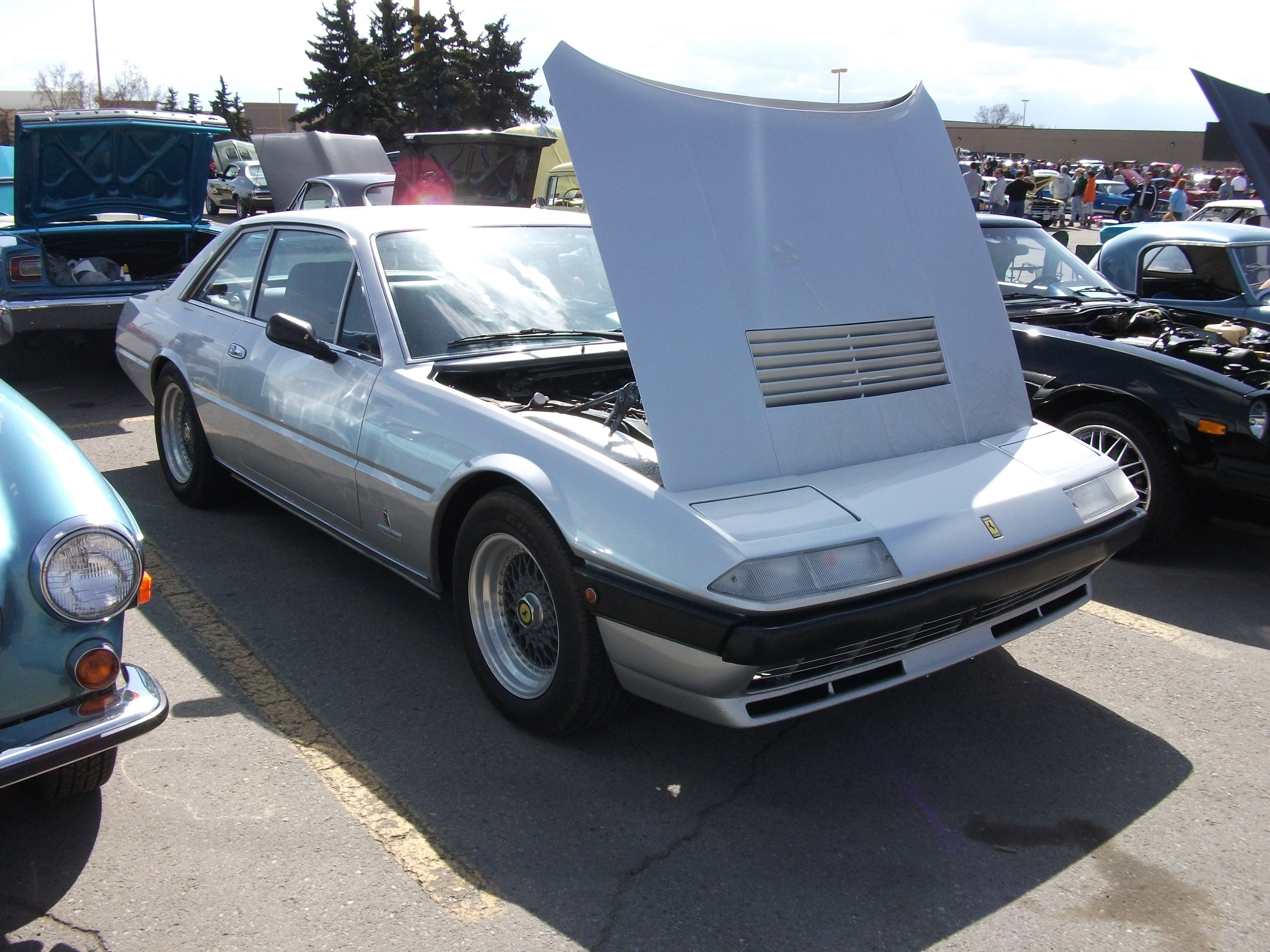
The Ferrari 400 and its close relatives — the 365 GT4 2+2, the fuel-injected 400i, and the final-evolution 412 — occupy an unusual position in the used Ferrari market. They were the marque's only genuine four-seaters of their era, blending the Colombo V12 engine with a boxy, angular design that has aged unusually well with Generation X buyers now at peak earning power.
Their appeal is also partly structural. While entry-level examples of the family can still be found for under £30,000, the combination of relative scarcity, a V12 soundtrack, and four real seats means demand has consistently outpaced supply in UK classifieds. Hagerty's valuation team characterises these cars as offering the best value-per-pound among desirable Ferraris — a rare judgement for a brand not known for affordability.
Model-by-Model Price Index: 365 GT4, 400, 400i, 412
Within the 400 family, values are not uniform. Hagerty's analysis identifies four distinct models with different price ceilings:
365 GT4 2+2 (1972–1976) The earliest car in the lineage commands a premium for its purity. The knock-on alloy wheels, cleaner front-end styling, and — crucially — the manual gearbox make it the purist's choice. Price trajectory: upward. The record for the nameplate was set in October 2025 when Niki Lauda's personal 1973 365 GT4 sold for €201,250 at RM Sotheby's in Munich, establishing a high watermark for the entire family.
Ferrari 400 (1976–1979) The rarest of the group at just 502 units produced, the 400 is also the sweet spot for buyers who understand the range. The 400GT with manual gearbox is rarer still — only 147 were built — and carries a corresponding price premium. The carburetted engine (six Weber DCOE units) delivers more power and arguably more character than the later injected car. Hagerty's excellent-condition value sits at £62,600, up 57% over five years.
Ferrari 400i (1979–1985) The fuel-injected variant is the most numerous and therefore the most accessible. Condition matters acutely here: a well-presented 400i with documented history was listed at no reserve at a Paris auction in early 2026 and sold for €89,125 including commission, clearing Hagerty's condition-appropriate value of £66,800. Yet poorly maintained examples — particularly those with automatic gearboxes that have been neglected — have recently changed hands in the UK for under £30,000. That £36,000-plus spread between the best and worst 400i examples is the defining feature of the model's price structure in 2026.
Ferrari 412 (1985–1989) The final evolution commands prices at the upper end of the family range, supported by ABS as standard equipment, a more modern flat-faced wheel design, body-coloured bumpers, and the most grunt of any car in the lineage. It appeals to buyers who want the most usable version of the formula.
What Is Driving Appreciation?
The 57% rise across five years compounds three separate forces:
- Generational demand. The angular, boxy aesthetic that defined Italian GT design in the late 1970s and early 1980s is precisely what a cohort of well-heeled buyers in their 40s and 50s grew up coveting. As that group accumulates wealth, demand for these cars has structurally increased.
- Relative value. Against modern Ferraris — where list prices routinely exceed £250,000 — a V12 Ferrari for under £65,000 reads as accessible, even if running costs are anything but modest. The emotional arbitrage between "Ferrari ownership" and the price of entry has widened, pulling buyers toward the classic segment.
- Colour and specification premiums. Interesting colour combinations have proven to amplify appreciation further. The Verde Pino Metallic 400i that attracted Rowan Atkinson's attention in Paris — and sold well above estimate — is illustrative: rarity of colour on an already-rare car compounds the scarcity premium.
Auction Evidence: Paris and Munich Set the Tone
The two most significant recent UK and European data points both run in one direction.
Niki Lauda's 365 GT4, sold at RM Sotheby's Munich in October 2025 for €201,250, is the headline number — but it reflects provenance as much as market pricing. The Paris 400i result is arguably more useful as a benchmark: an unexceptional car at no reserve, sold publicly, clearing its Hagerty guide value by a meaningful margin. That is the kind of result that recalibrates dealer ask prices and sets the floor for future private sales.
Where Values Can Still Collapse
Appreciation is not guaranteed across the board. The 400 family's price distribution has a long lower tail, and several factors can drag a car into the sub-£30,000 bracket:
- Automatic gearbox on an unloved example. The GM-sourced three-speed automatic, while period-correct, is significantly less desirable than the manual in UK buyer sentiment. Combined with deferred maintenance, automatic-gearbox cars are trading at steep discounts.
- Rust and structural corrosion. These cars can suffer from rust almost as severely as a tired engine. Poor structural integrity is a value destroyer — and rectification costs can exceed the car's market value.
- Incomplete or absent service history. Maintenance records are not optional documentation on a car of this complexity. A Colombo V12 with no history is not a bargain; it is a liability.
Buyers treating low sticker prices as value should note that servicing costs on these cars remain gilt-edged regardless of purchase price — a running cost reality that has historically punished under-capitalised ownership.
Key Takeaways
- Ferrari used car prices in the UK's classic 400 family have risen 57% over five years, with excellent examples now valued at £62,600 by Hagerty.
- Within the family, the 365 GT4 2+2 and the 412 command the highest prices; the 400 (especially the manual-gearbox GT) is the rarest single model at 502 units.
- A Paris auction in early 2026 and the October 2025 Munich record sale both confirm upward price momentum for well-presented, correctly specified cars.
- The spread between the best and worst examples in the same model can exceed £36,000 — condition, gearbox choice, and service history are the primary value drivers.
- Buyers seeking the cheapest route into a V12 Ferrari should budget for running costs that bear no relationship to purchase price; deferred maintenance risk is highest on sub-£30,000 examples.
Sources
- Hagerty UK — The Valuation Verdict: Ferrari 400 (26 March 2026)