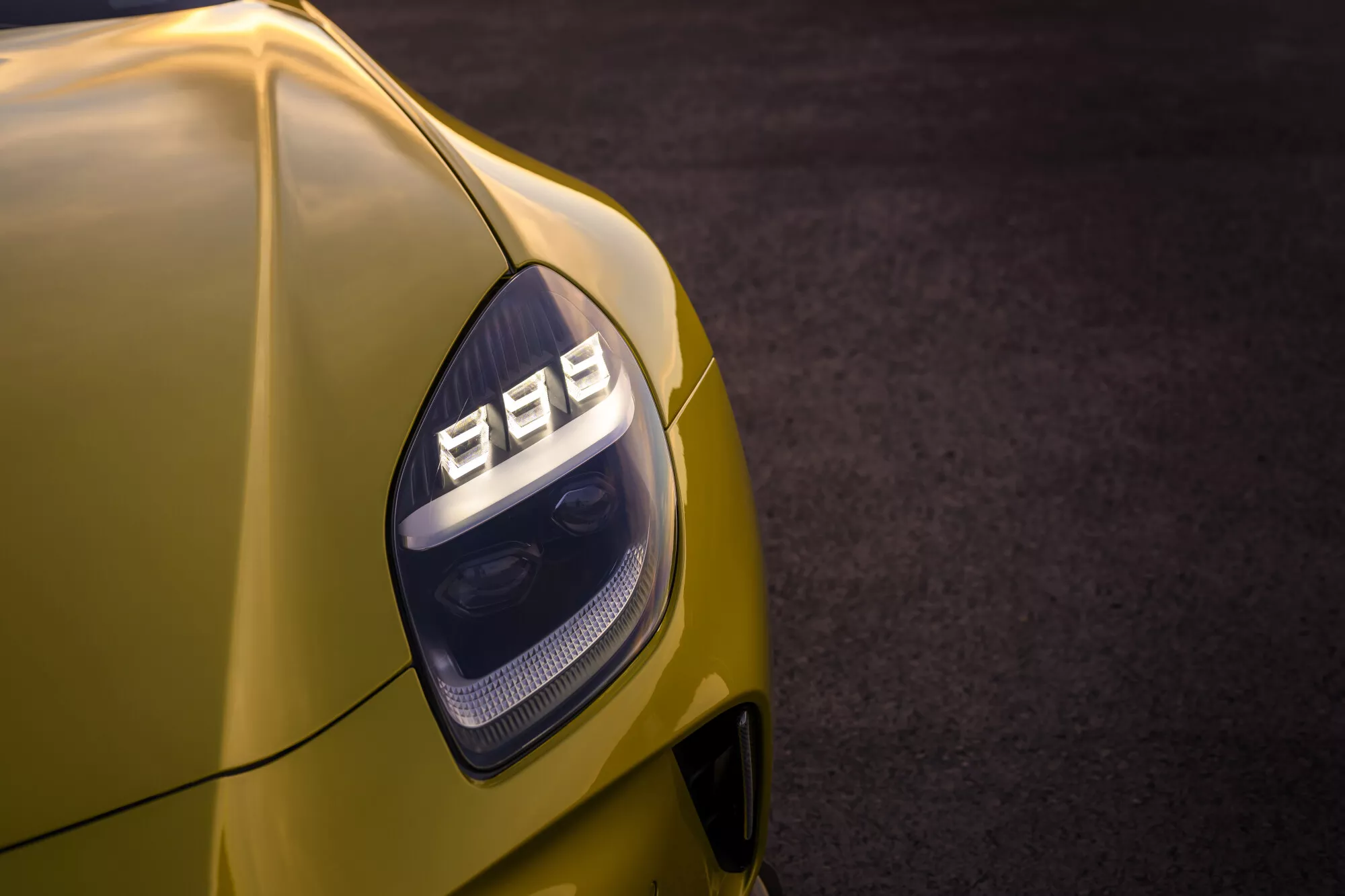
Aston Martin Vantage vs Porsche 911 Carrera S UK
Should you buy the Aston Martin Vantage or Porsche 911 Carrera S new in the UK? We compare real-world performance, ownership costs, and driver satisfaction.
- The Badge Premium Question
- Performance and Powertrain
- How They Drive
- Ride Comfort and Daily Usability
- Running Costs and Value
- Which Should You Buy?
- Key Takeaways
- Sources
The UK sports car market in 2025 offers buyers a genuinely difficult choice: the Aston Martin Vantage, with its V8 muscle and unmistakable British identity, or the Porsche 911 Carrera S, a car so thoroughly developed over six decades that it has become the default benchmark for the segment. Both sit in a price band where badge snobbery runs high — but the ownership experience can diverge considerably from what the showroom visit suggests.
The Badge Premium Question
The Aston Martin Vantage carries a prestige that no amount of lap-time data can fully quantify. It is rarer on the road, more theatrical in appearance, and — for many buyers — the more emotionally satisfying choice the moment you sign the order form. That emotional charge comes at a cost, though.
The Porsche 911 Carrera S, part of the updated 992.2 generation, was named What Car? Sports Car of the Year 2026. That kind of industry recognition reflects something the ownership data bears out: the 911 is a car that makes you feel clever every time you drive it, not just on the day you buy it.
For UK buyers spending north of £100,000 on a sports car, the question is not simply which one is faster — it is which one you will still want to own in five years.
Performance and Powertrain
The Porsche 911 Carrera S uses a 3.0-litre twin-turbocharged flat-six producing 473bhp. That is enough to dispatch 0–62mph in 3.3 seconds, paired to an eight-speed dual-clutch PDK gearbox that What Car? describes as "much more responsive than the auto 'box in the Aston Martin Vantage."
The Vantage's twin-turbocharged 4.0-litre V8 produces around 503bhp in current specification — more power on paper — yet the Porsche's PDK gearbox advantage means the 911 feels sharper in point-to-point driving. Tellingly, the 911 Carrera GTS (the next step up in the 911 range, with its new mild-hybrid 3.6-litre flat-six producing 534bhp) manages 0–62mph in 3.0 seconds, which What Car? notes is "quicker than the vastly more expensive Vantage."
That is a useful data point for Vantage buyers to absorb. You are not getting a straight-line edge over Porsche's mid-range offering — you are paying for character, sound, and brand cachet.
How They Drive
The 911 Carrera S is rear-wheel drive as standard and comes with Porsche's PASM adaptive suspension. Its steering is widely praised for being "beautifully weighted and accurate," allowing the car to flow through bends with minimal effort. Rear-wheel steering is available as an option and sharpens the car's agility further.
The Vantage counters with a rawer, more visceral character. Its V8 soundtrack is hard to match, and the car feels more immediately dramatic — but that drama can work against it. Where the 911 instils confidence through precision, the Vantage demands a little more of the driver, particularly in wet conditions common to UK roads.
For everyday enjoyment, the 911's composure at varied speeds — from motorway cruising to B-road enthusiasm — is a consistent strength. The PASM suspension has a softer setting that works adequately in town and a Sport setting that tightens body control on faster roads. The Carrera T variant adds PASM Sport Suspension as standard, sitting 10mm lower and providing tighter overall control; PASM Sport Suspension is also available as an option on the Carrera S.
Ride Comfort and Daily Usability
This is where the 911 builds a meaningful lead for buyers who drive their sports cars year-round. The 992.2 generation is genuinely practical for a sports car: there is rear-seat space sufficient for occasional use, decent luggage capacity, and enough everyday refinement that commuting in it is not a penance.
The main caveat is road noise. What Car? lists this as one of the 911's notable weaknesses — it is a persistent companion at motorway speeds, and UK roads do the car no favours. The Vantage is not immune to this either, but its character tends to frame noise as theatre rather than intrusion.
Options on the 911 are expensive, and buyers should budget carefully above the base price. The Vantage is similarly options-heavy; expect the final invoice to be materially higher than the list price for either car.
Running Costs and Value
The Porsche 911 Carrera S starts from around £125,000 in current UK specification. The entry-level 911 Carrera — with 389bhp and a 3.9-second 0–62mph time — is available from £104,990, giving a sense of where the Carrera S sits in the range hierarchy.
Porsche's residual values are consistently strong. The 911 holds its value better than almost any rival in the segment, which directly affects the cost of finance and the eventual trade-in. This is one of the least-discussed but most financially significant factors in the comparison: a car that depreciates slowly is effectively cheaper to own, even if it costs more to buy.
The Aston Martin Vantage has improved in this regard, but Porsche's reputation for reliability and the sheer volume of specialist knowledge in the independent service network give the 911 a structural advantage. Servicing costs for both cars are substantial; Porsche's widespread dealer network across the UK does ease the logistics.
Which Should You Buy?
If you want the sports car that will reward you most consistently — across performance, usability, reliability, and residual values — the Porsche 911 Carrera S is the rational choice. It earned Sports Car of the Year recognition for 2026 precisely because it excels across the full range of criteria that matter over years of ownership.
The Aston Martin Vantage makes a strong case on different grounds: it is more emotionally charged, rarer, and for drivers who value theatre and British provenance, it may simply be the right car regardless of the spec-sheet comparison. If the Vantage speaks to you in the way that only certain cars do, that feeling is worth something.
But if you are asking which sports car to buy on merit — performance delivered, running costs contained, and satisfaction sustained — the 911 Carrera S is the harder car to argue against.
Key Takeaways
- The Porsche 911 Carrera S (473bhp, 0–62mph in 3.3sec) matches or exceeds the Vantage in point-to-point pace despite lower headline power, thanks to a superior PDK gearbox.
- The 911's adaptive PASM suspension makes it more liveable on UK roads year-round, though road noise remains a weakness.
- Porsche's residual values and widespread service network give the 911 a structural cost-of-ownership advantage over the full ownership cycle.
- The Vantage's V8 character, soundtrack, and British exclusivity are real differentiators — but they carry a premium in both purchase price and long-term costs.
- What Car? named the 911 Sports Car of the Year for 2026, reflecting consistent excellence across performance, practicality, and ownership satisfaction.
Sources
What Car? — Porsche 911 Review 2026, Price & Specs (22 January 2026)