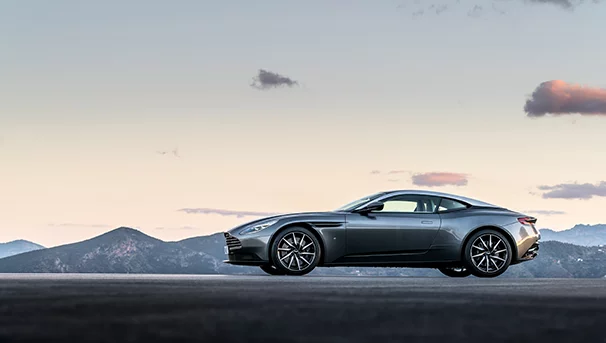
Aston Martin Resale Value UK: DB11, Vantage and DBX Depreciation
Aston Martin resale value UK data shows the DB11 V12 has lost more than 60% of its original list price — here's what five years of depreciation means for buyers considering the DB11, Vantage, or DBX.
- Why Aston Martins Depreciate So Heavily
- DB11 V12 Depreciation: The Numbers
- The V8 vs V12 Divide
- What About the Vantage and DBX?
- What Buyers Should Know in 2026
- Key Takeaways
- Sources
Aston Martin resale value has become one of the defining conversations in the UK premium used-car market. Across the DB11, Vantage, and DBX, the story over the past five years has largely been one of steep, consistent decline — with the DB11 V12 now available secondhand for a fraction of what it cost when new. For buyers in 2026, that erosion creates an unusually compelling entry point, but it also raises the question of whether residuals are beginning to stabilise.
Why Aston Martins Depreciate So Heavily
The broader high-performance car market has experienced accelerating depreciation over the past decade, and Aston Martin sits near the top of that curve. According to CarBuzz's analysis of cars with the biggest depreciation hits, the DB11 ranks among the ten high-performance cars with the steepest value losses in the modern segment — a list that also includes the Acura NSX, Audi R8, and Ferrari California.
The reasons are structural. The DB11's cabin technology was considered dated even at launch, a significant mark against a car competing at the highest price points. While the car has the looks and presence to turn as many heads as any Italian rival, it does not match the sharp driving dynamics of Ferrari or Lamborghini. In a marketplace where buyers can increasingly choose between more options at every price point, residual values suffer across the whole range.
The proliferation of accessible performance cars has fundamentally changed the used-car calculus. A car that once held value through exclusivity now faces direct competition from a wide field of well-equipped, high-power alternatives — and buyers know it.
DB11 V12 Depreciation: The Numbers
The headline figure is stark. The DB11 V12, which originally retailed for well over $200,000 in the US, can now be found for under $80,000 — typically with around 40,000 miles recorded. That represents a depreciation of more than 60% from new.
UK pricing follows a broadly similar proportional trajectory. A DB11 V12 bought at launch and held for five years has absorbed a comparable scale of loss in pound terms, adjusted for local market conditions and the pound-dollar differential.
The pace of decline is not uniform across those five years. The sharpest drops occur in years one to three, as the initial premium attached to a brand-new Aston Martin evaporates once the car leaves current-model status. By the time an example reaches the 30,000–40,000-mile mark, it has typically absorbed the bulk of its depreciation — which is why the used market currently offers cars at prices that would have seemed implausible five years ago.
The V8 vs V12 Divide
Not all DB11s depreciate equally. The V12 remains the more sought-after variant on the used market, owing to its relative rarity and the character of its engine. The V8 — sourced from Mercedes-AMG's twin-turbocharged 4.0-litre unit — offers strong performance and the reassurance of a proven powertrain, but commands less attention from enthusiast buyers.
This split matters for buyers weighing their options. A V12 example may prove a more stable long-term asset if the collector market continues to prioritise the original engine configuration. The V8, conversely, tends to represent the stronger pure value proposition on paper — lower acquisition cost, familiar mechanicals, and arguably easier long-term ownership.
What About the Vantage and DBX?
Available data from our sources covers the DB11 most directly. The Vantage and the DBX — Aston Martin's SUV entry — both follow the broader brand depreciation pattern, though granular five-year UK retail data for each model was not comprehensively available at time of publication.
What is consistent across the range is the brand-level dynamic: Aston Martin competes in a segment where residual support is structurally weaker than rivals with higher production volumes, broader dealer footprints, and stronger manufacturer financial services. The 2024 product refresh — which addressed technology and dynamics criticisms that had long been cited as drivers of depreciation — represents the brand's clearest attempt to stabilise residuals going forward.
Whether that effort translates into improved retention rates will only be visible in 2025–2026 used-market data as refreshed examples begin to appear in volume. Early indications will be clearest in the Vantage segment, where the refreshed model faces direct comparison to its predecessor on classified sites.
What Buyers Should Know in 2026
For UK buyers, the current used market represents both a compelling opportunity and a caution worth internalising. The DB11 V12 in particular sits at a price point that, five years ago, would have been unthinkable for a car of this specification and heritage. The DBX and Vantage offer similar accessibility relative to their original launch prices.
The caution is equally important: the low acquisition cost does not eliminate the ongoing cost of ownership. Specialist servicing, parts availability, and the cost of rectifying deferred maintenance on a used Aston Martin can be substantial. Buyers who budget only for the sticker price often find the true cost of ownership considerably higher.
The 2024 refresh models — carrying updated technology and addressing the interior criticisms that dogged earlier cars — represent a more considered used buy for those who can wait for examples to reach sensible price points in the next year or two.
Key Takeaways
- The Aston Martin DB11 V12 has lost more than 60% of its original list price, with used examples available from under $80,000 in the US; UK pricing has followed a comparable proportional decline.
- Depreciation is driven by competition from Italian rivals, dated interior technology at launch, and the wider proliferation of high-performance options across the market.
- The V12 engine variant retains stronger used-market demand than the Mercedes-sourced V8, owing to rarity and engine character.
- The 2024 product refresh is Aston Martin's structural response to residual value pressure; its impact on used prices will emerge more clearly through 2025–2026 data.
- Low acquisition cost on any used Aston Martin must be weighed against specialist servicing costs and long-term maintenance liabilities.
Sources
CarBuzz — 10 High-Performance Cars with the Biggest Depreciation Hits (September 22, 2025)