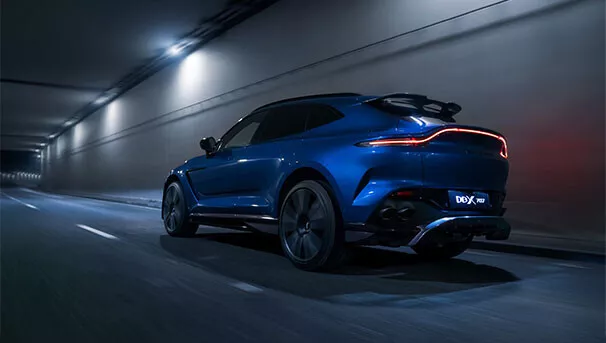
Aston Martin DBX707 vs Lamborghini Urus: UK's Best Performance SUV 2026
The DBX707 and Urus go head-to-head on track pace, everyday usability, dealer experience, and five-year costs — here's which performance SUV wins in the UK for 2026.
- Performance and pace
- Ride, handling, and everyday usability
- Interior quality and luxury
- Running costs and five-year ownership
- Which should you buy?
The market for ultra-fast luxury SUVs has never been more competitive, and in 2026 two names sit at the sharp end: the Aston Martin DBX707 and the Lamborghini Urus SE. Both promise supercar-shaming acceleration wrapped in a school-run body, but they take very different routes to get there — and the gap between them on price, usability, and long-term cost is wider than the spec sheets suggest.
Performance and Pace
On outright numbers, the Lamborghini Urus SE holds a narrow edge. Its 4.0-litre twin-turbo V8 combined with a plug-in hybrid electric motor produces 789bhp and 701lb ft of torque, dispatching 0–62mph in 3.4 seconds on the way to a 194mph top speed. The discontinued Urus Performante — the non-hybrid variant many buyers are still finding on forecourts — was fractionally quicker at 3.3 seconds thanks to a 47kg weight saving, even with its lower 657bhp output.
The DBX707, Aston's range-topping SUV, answers with 707PS (697bhp) from a twin-turbo 4.0-litre V8 of its own and a 0–60mph time of 3.3 seconds. On a drag strip, it's virtually identical to the old Performante.
What separates them on track is character. The Urus's hybrid system delivers an immediate electric kick before the V8 surges in — the launch control and a dedicated overtake button on the steering wheel add to the sense of occasion. The Aston relies on a more traditional, driver-focused setup, with What Car? noting its automatic gearbox is less quickfire than the Urus's in sport modes, though the gap is marginal in real-world overtaking.
Winner on outright pace: Urus SE (just), though the DBX707 matches the old Performante.
Ride, Handling, and Everyday Usability
Both SUVs use adaptive air suspension and four-wheel drive, but they tune their chassis for different audiences.
The Urus SE weighs around 2.5 tonnes thanks to its hybrid battery pack, yet its four-wheel steering, electronically controlled rear differential, and six drive modes work together to make it feel far smaller. Sport mode loosens the rear axle deliberately, delivering a rear-driven feel that no other SUV at this price can match. What Car? describes its handling as "astonishingly" capable, calling it "the most fun and capable sports SUV you can buy" if exhilaration is the priority.
The DBX707 is lighter and, according to the same reviewers, "almost as good to drive" — but with a softer edge. Where the Urus rewards commitment, the Aston is more forgiving and better suited to longer motorway stints. Ride quality in comfort mode on both is genuinely good, but the Aston edges ahead for refinement at speed.
For daily use, the Urus SE adds a meaningful differentiator: up to 37 miles of pure-electric range and an 84mph EV top speed mean urban commutes in zero-emission mode are genuinely feasible. Regenerative braking does introduce some pedal inconsistency — a noted weakness — but the benefit for urban running and benefit-in-kind calculations is real. The DBX707 has no electrification at all.
Winner on everyday usability: Urus SE (electric range tips it); DBX707 wins on refined long-distance cruising.
Interior Quality and Luxury
This is where the Aston makes its strongest case. What Car?'s reviewers are direct: the DBX707's interior "feels more befitting the price" than the Urus's, and the Lamborghini's finish "doesn't match its price rivals." The Urus received a revised 12.3-inch infotainment screen with the SE update, but the overall ambience still lags behind what you'd expect at £213,615 list price.
The DBX707's cabin is more traditionally luxurious — hand-stitched leather, cleaner surfaces, and a layout that prioritises the driver without feeling like a supercar transplant. Boot space and rear legroom are competitive on both, but neither is as practical as a Bentley Bentayga or Porsche Cayenne.
Winner on interior quality: Aston Martin DBX707.
Running Costs and Five-Year Ownership
Both cars carry eye-watering price tags. The Urus SE opens at £213,615, while DBX707 pricing sits broadly in the same bracket. Nearly-new Urus examples are listed from £300,000 — a reflection of strong residual demand, though also a warning that depreciation curves can steepen sharply on low-volume exotica.
Key cost considerations over five years:
- Fuel: The Urus SE's hybrid system cuts fuel costs meaningfully for drivers who charge regularly — CO₂ of 140g/km also reduces company car tax and first-year VED versus the all-petrol DBX707.
- Servicing: Both require specialist franchise servicing. Lamborghini's UK dealer network is smaller than Aston's, which has expanded significantly since the Geely investment era; parts availability and loaner cars tend to be better at Aston dealers in regional markets.
- Insurance: Group ratings for both are at the top of the scale. The Urus's higher list price and repair complexity (hybrid components) can push premiums higher.
- Depreciation: Aston Martins historically depreciate more steeply than Lamborghinis in the UK, though the DBX range has bucked that trend somewhat. The Urus Performante, now discontinued, may see classic appreciation in time.
- Charging infrastructure: Home wall-box installation (roughly £800–£1,000) is a sensible addition for Urus SE owners; a full charge takes around 3.5 hours from a 7kW box.
Winner on five-year cost: Urus SE, if you charge regularly. DBX707 if you don't have home charging.
Which Should You Buy?
The choice comes down to priorities. If track-day credibility, hybrid efficiency, and outright drama are what you're after, the Urus SE is the harder car to argue against — it's faster in most real-world scenarios, more technologically advanced, and its electric range softens the day-to-day running costs.
If cabin quality, long-distance comfort, and a more exclusive showroom experience matter more, the DBX707 is the stronger proposition. It's marginally cheaper to buy, better appointed inside, and easier to live with on a long run to the south of France.
What Car? perhaps puts it best: the Urus would be a five-star car if judged on driving alone, but the Aston "does the luxury side a bit better." Neither is the wrong answer. Both will make most supercars look slow at a roundabout.
Key Takeaways
- The Lamborghini Urus SE produces 789bhp and hits 62mph in 3.4 seconds; the DBX707 delivers 697bhp and 3.3 seconds — effectively identical in a straight line.
- The Urus SE's 37-mile electric range and 140g/km CO₂ give it a meaningful running-cost advantage for urban drivers with home charging.
- Aston Martin's DBX707 beats the Urus on interior quality and long-distance refinement, according to What Car? reviewers.
- The Urus SE lists from £213,615; nearly-new examples command over £300,000, signalling strong residuals but steep entry costs.
- Buyers who prioritise driving exhilaration and tech should choose the Urus; those who value luxury ambience and comfort should lean toward the DBX707.
Sources
What Car? — Lamborghini Urus Review 2026, Price & Specs (15 March 2026)